Marrying a Vietnamese Citizen in Da Nang: Office, Documents and Fee for Foreigners (2026)
A commune-level People's Committee — not the district-level office the 2014 law still names — registers a marriage between a foreigner and a Vietnamese citizen today. The file includes a declaration, medical certificates, and the foreigner's marital-status document. Processing takes 5 working days, up to 10 if verification is needed; both parties must be present when the marriage is registered.
On this page
If you’re marrying a Vietnamese citizen in Da Nang, the first thing to get right is which office you’re dealing with. Under Decree 120/2025/NĐ-CP, the commune-level People’s Committee (xã, phường or đặc khu) exercises the civil-status registration powers set out in the Law on Civil Status, and the same decree sets the time limit for registering a marriage with a foreign element.
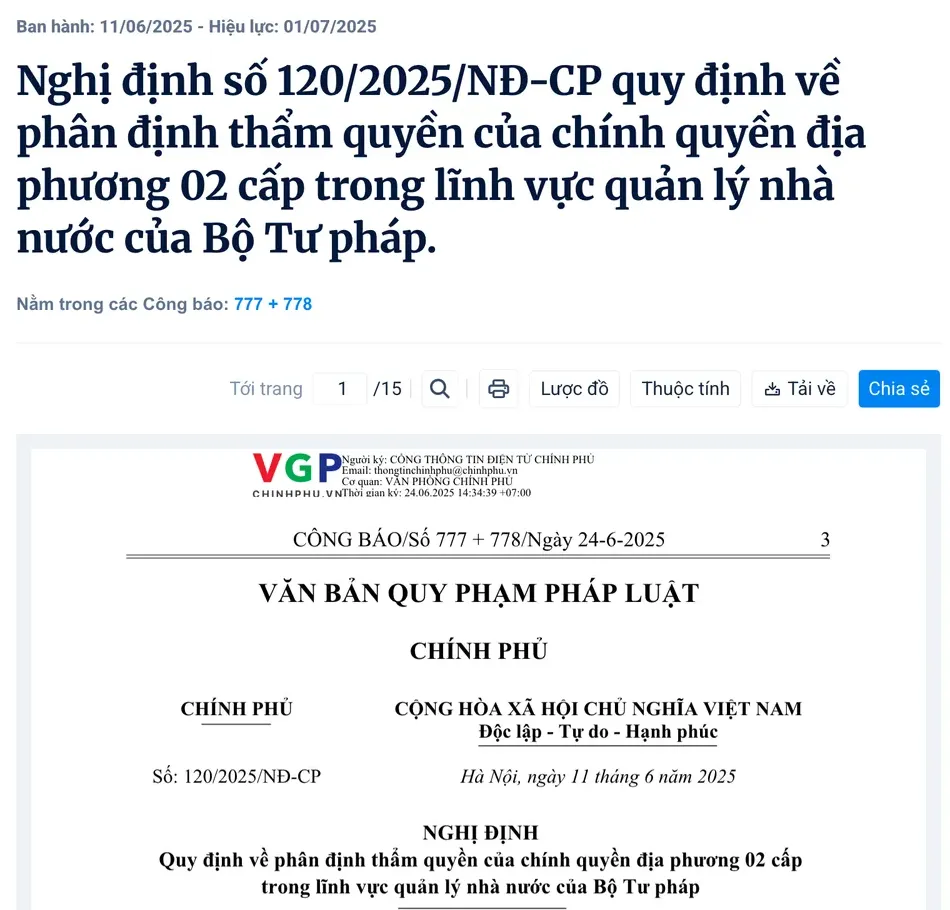
That’s a change worth flagging, because the Law on Civil Status itself, Article 37, still names a different office: it says the district-level People’s Committee where the Vietnamese citizen resides registers a marriage between a Vietnamese citizen and a foreigner. Article 38 of the same law, describing how the certificate is handed over, likewise still names the chairperson of the district-level People’s Committee. The power now sits with the commune-level People’s Committee under Decree 120/2025/NĐ-CP, in force from 1 July 2025.
Conditions to marry
The man must be at least 20 years old and the woman at least 18, both must marry voluntarily, neither can have lost civil act capacity, and the marriage must not fall into one of the prohibited cases; the state does not recognise marriage between people of the same sex. The prohibited cases are: a sham marriage; child marriage, forced marriage, deceit, or obstruction of marriage; one party already married or cohabiting as spouses with someone else; and marriage between people who are direct-line blood relatives.
The marriage file
Both of you submit a marriage-registration declaration form to the civil-status registration authority, and you must both be present when the marriage is registered. You can declare jointly on a single form. Both of you also submit a certificate from a competent Vietnamese or foreign medical body confirming you don’t have a mental illness or other condition that leaves you unable to perceive or control your own behaviour.
On top of that, the foreign partner (or a Vietnamese citizen living overseas) submits a document proving their marital status, plus a copy of their passport or an equivalent travel document. That marital-status document has to be one issued by the foreign partner’s own competent authority, still valid, confirming they are currently not married; if their country doesn’t issue that kind of confirmation, a document from its competent authority confirming they meet that country’s conditions to marry can replace it. If the document doesn’t state an expiry date, it’s valid only 6 months from its date of issue. If the foreign partner has no passport to present, an international travel document or a residence card can stand in for it.
If the Vietnamese partner has already divorced, or had a marriage annulled, by a competent foreign authority, they also submit a copy of the civil-status extract recording that divorce or annulment. A Vietnamese partner who is a cadre, a civil servant, or serving in the armed forces additionally submits a document from their managing agency or unit confirming that marrying a foreign national doesn’t conflict with that agency’s or force’s own regulations.
Decree 111/2011/NĐ-CP lists when documents are exempt from consular certification or legalisation: when a treaty Vietnam and the other country have both joined, or reciprocity, provides for it; when they’re transferred directly or through diplomatic channels between competent authorities; when Vietnamese law exempts them; or when the receiving Vietnamese or foreign agency doesn’t require legalisation under its own applicable rules.
Processing time and presence
Registration must be completed within 5 working days of the office receiving a complete, valid dossier; if verification is needed, that can extend to no more than 10 working days. When you register, both of you must be at the People’s Committee office; the civil-status officer asks you both, and if you’re marrying voluntarily, records it in the civil-status register, which you both sign, then you both sign the marriage certificate before it’s handed over.
Fee in Da Nang
Da Nang’s People’s Council passed Resolution 05/2025/NQ-HĐND on 11 November 2025, setting the subjects, rates and collection rules for civil-status fees across the city. Its fee table lists 1,500,000 VND for registering a marriage, and 1,500,000 VND for re-registering one — the same figure as the general national fee cap for civil-status procedures with a foreign element.
Separately, Da Nang’s People’s Council passed Resolution 13/2025/NQ-HĐND on 11 December 2025, setting a 0-VND fee for administrative procedures filed through the city’s online public-service portal, in force from 21 December 2025 to 31 December 2027. Civil-status fees are among the fees this resolution sets at 0 VND.
Can you file online?
Da Nang’s own portal makes civil-status fees free when a procedure is filed online. Whether the foreign-element marriage dossier itself is filable online, even in part, ahead of the in-person appointment described in the law, is not confirmed by any official page found. Both of you have to be at the People’s Committee office in person to register, so at minimum the final step isn’t a remote one.
What comes next
Once you’re married, related reading includes temporary residence registration, a temporary residence card in Da Nang, current Vietnam immigration fees, and Vietnam tax residency rules for anyone planning to stay long-term. Bringing a pet into the mix? See bringing a dog or cat to Vietnam. For more on family life in Da Nang, see the family section hub.
Step by step
- Check you both meet the conditions to marryThe man must be at least 20 and the woman at least 18, both marrying voluntarily, neither having lost civil act capacity, and the marriage must not be a prohibited case. Prohibited cases include sham marriage, child marriage, forced marriage, deceit, one party already married or cohabiting as spouses with someone else, or a direct-line blood relationship.
- Gather the foreign partner's documentsA certificate from their own country's competent authority, still valid, confirming they are currently not married — or, if that country issues no such certificate, one confirming they meet its conditions to marry. A document without a stated expiry is valid only 6 months from its date of issue. Add a medical certificate on mental capacity and a passport, or an international travel document or residence card if they have none. Check whether your documents fall under an exemption from consular legalisation.
- Gather the Vietnamese partner's documentsThe same declaration form and medical certificate on mental capacity. If the Vietnamese partner has already divorced or had a marriage annulled by a competent foreign authority, add a copy of the civil-status extract recording that. If they are a cadre, civil servant, or serving in the armed forces, add a confirmation from their managing agency or unit that marrying a foreign national doesn't conflict with its own regulations.
- File the dossier at the commune-level People's CommitteeFile at the commune-level People's Committee (xã, phường or đặc khu), which now exercises this registration power; Article 37 of the Law on Civil Status ties registration to where the Vietnamese citizen resides, or, if the foreigner resides in Vietnam, to where either of you resides. Processing takes 5 working days from a complete, valid dossier, up to 10 working days if verification is needed.
- Attend together to register and collect the certificateBoth parties must be present when the marriage is registered; the civil-status officer asks them both, and if they marry voluntarily, records it in the civil-status register, which both sign, then both sign the certificate before it is handed over.
- Pay the feeDa Nang's civil-status fee table sets 1,500,000 VND for registering the marriage, matching the national fee cap for civil-status procedures with a foreign element. Civil-status fees are 0 VND for procedures filed through Da Nang's online public-service portal, under a resolution in force from 21 December 2025 to 31 December 2027; whether this dossier can be filed that way is not confirmed.
Not confirmed: Whether the foreign-element marriage dossier is filable online, even partly, through the National Public Service Portal or Da Nang's own dịch vụ công portal, before the in-person appointment described in the law, is not confirmed by any official page found. Da Nang's 0-VND online-filing fee resolution covers civil-status fees generally, but no official page found confirms this specific dossier is filable online in advance. Whether a domestic-procedure change removing the paper marital-status certificate for Vietnamese citizens also affects what the Vietnamese partner submits for this dossier is not confirmed. One clause on which foreign documents are exempt from consular legalisation is sourced from a text-mirror site rather than the primary decree text, so treat its wording as reliable but not verified word-for-word against the official gazette.
Common questions
Which office registers a marriage between a foreigner and a Vietnamese citizen in Da Nang?
The commune-level People's Committee (xã, phường or đặc khu) now exercises this registration power under Decree 120/2025/NĐ-CP. Article 37 of the Law on Civil Status ties the registration to where the Vietnamese citizen resides, or, if the foreigner resides in Vietnam, to where either of you resides; its text still names the district-level People's Committee.
What documents does the foreign partner need?
A joint declaration form, a certificate from their own country's competent authority confirming they are currently not married (or, if that country issues no such certificate, one confirming they meet its conditions to marry), a medical certificate on mental capacity, and a passport, or an international travel document or residence card if they have no passport.
How long does registration take?
5 working days from a complete, valid dossier; up to 10 working days if the office needs to verify anything.
Do both people have to show up in person?
Both must be present at the People's Committee office when the marriage is registered: the civil-status officer asks you both, records the marriage in the register, and you both sign the register and the certificate.
How much does registering the marriage cost in Da Nang?
1,500,000 VND, per Da Nang's civil-status fee table under Resolution 05/2025/NQ-HĐND — the same figure as the national fee cap for civil-status procedures with a foreign element.
Can the fee be 0 VND if I file online?
Da Nang's Resolution 13/2025/NQ-HĐND sets civil-status fees at 0 VND when a procedure is filed through the city's online public-service portal, in force from 21 December 2025 to 31 December 2027. Whether the foreign-element marriage dossier itself is filable online is not confirmed by any official page found.
What are the legal conditions to marry in Vietnam?
The man must be at least 20 and the woman at least 18, both must marry voluntarily, neither can have lost civil act capacity, and the marriage must not fall into a prohibited case; Vietnam does not recognise marriage between people of the same sex. Prohibited cases include sham marriage, child marriage, forced marriage, deceit, one party already married, or a direct-line blood relationship.
Do the foreign partner's documents need consular legalisation?
Decree 111/2011/NĐ-CP lists when documents are exempt from consular certification and legalisation: when a treaty or reciprocity provides for it, when they pass directly between competent authorities or through diplomatic channels, when Vietnamese law exempts them, or when the receiving agency doesn't require it under its own rules. Check with the commune office which of your documents it asks you to legalise.
Next in Family & schools
General information checked against the sources listed above, not legal advice for your situation. Rules and office practice change; confirm with the immigration office or a licensed adviser before you act. See how guides are checked.
Spotted an error? Report it.