Vietnam Immigration Fees in 2026: Visas, TRCs and Extensions
Two very different documents cost exactly the same under Vietnam's 2026 fee schedule: a multiple-entry visa valid over 5 to 10 years and a temporary residence card valid over 5 to 10 years both cost US$165. Circular 28/2026/TT-BTC, in force since 1 April 2026, sets every fee below, and none of it is refunded if your application is refused.
The same $165 shows up twice
Open the fee schedule attached to Circular 28/2026/TT-BTC and two very different documents land on the same number. A multiple-entry visa valid for more than 5 years and up to 10 years costs US$165. A temporary residence card (thẻ tạm trú) covering that same 5-to-10-year band costs the same US$165. One is a visa, the other a separate residence card with its own procedure, but the price is identical.
The circular behind every number here
Circular 28/2026/TT-BTC was signed in Hanoi on 27 March 2026 and took effect five days later, on 1 April 2026. It replaced Circular 25/2021/TT-BTC and repealed Circular 62/2023/TT-BTC, the circular that had amended it — so any guide still quoting fees from either of those two is describing a schedule that no longer applies.
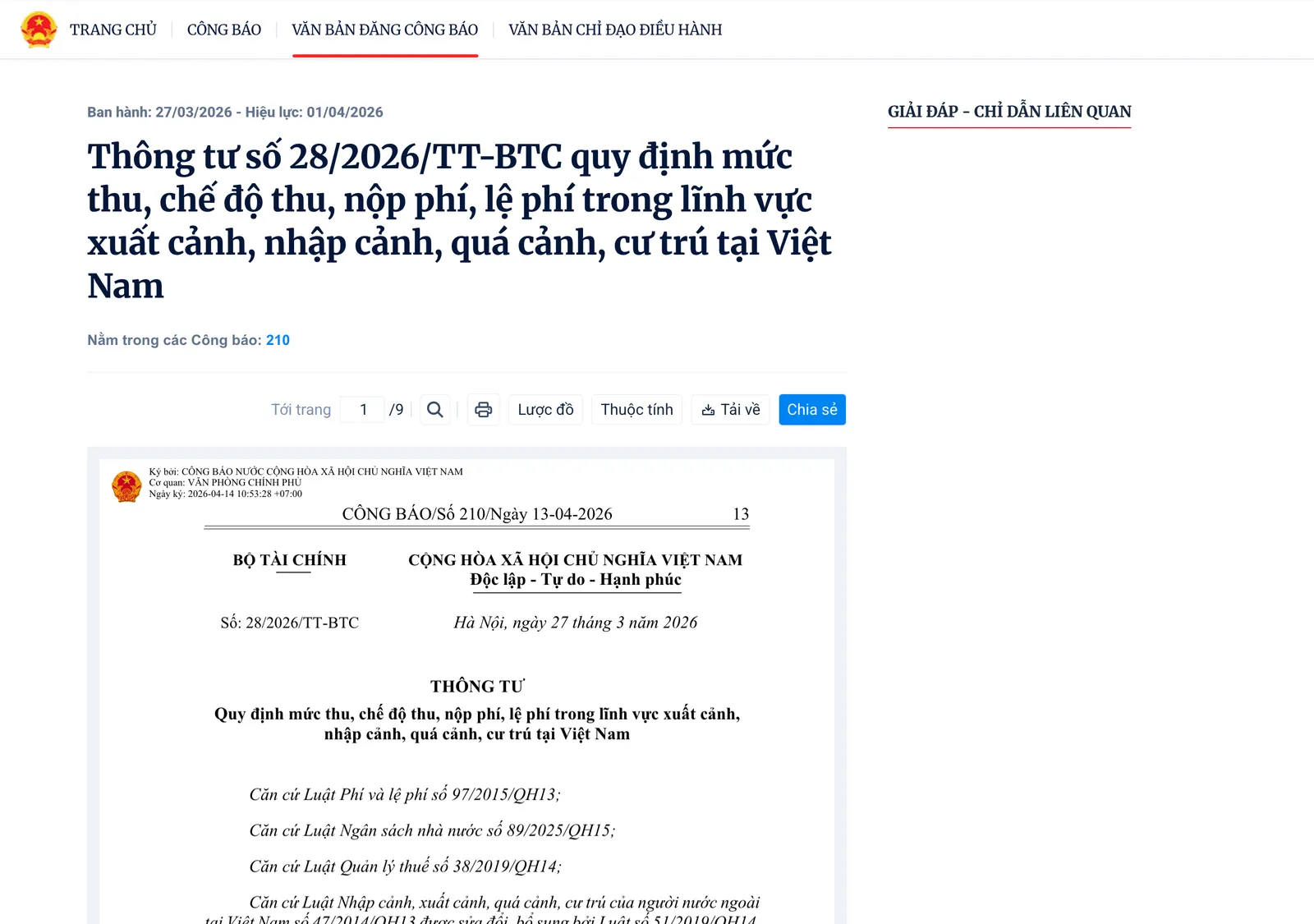
The Gazette record above shows the circular’s cover page and its effective-date header; the fee table itself sits further into the document. Section II of that table is what the diagram below reproduces in full.
Extending a stay: the cheapest line on the list
A temporary-stay extension (gia hạn tạm trú) — the paperwork that pushes out the dates on a stay you already have — costs US$10 per extension. That’s a different line item from a new visa: even the shortest multiple-entry visa, valid up to 90 days, costs US$50.
An e-visa is priced the same way. The Ministry of Public Security’s e-visa procedure lists 25 USD for a single-entry e-visa and 50 USD for a multiple-entry one, and evisa.gov.vn says the fee is paid through its e-payment gateway and is non-refundable if the visa is not granted. I walk through how the extension itself works, sponsor and all, in extending a stay in Da Nang.
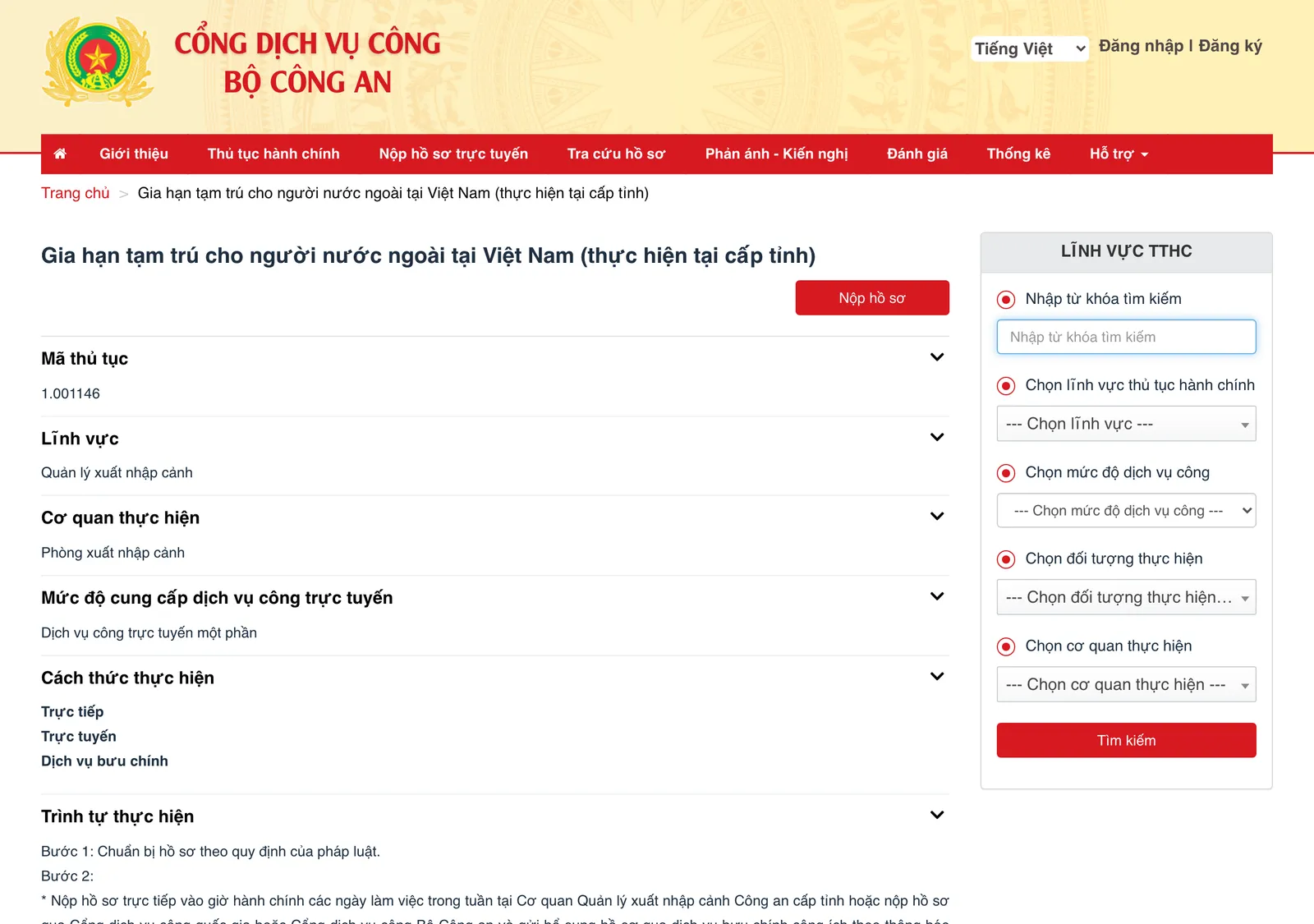
The same procedure appears on the Ministry of Public Security’s public service portal, procedure 1.001146; its own fee field lists the same US$10 figure as the circular.
Not refunded if you’re refused, and reissues cost like new
Two rules apply across the whole schedule, not just one line. First: if an applicant does not meet the conditions for the visa or document applied for, or refuses to accept the result once it’s processed, the fee already collected is not refunded. Second: if a visa, temporary residence card or other document on this list is lost, damaged, or expires and has to be re-issued, the replacement is charged at the same rate as a new one — there’s no separate, cheaper “reissue” fee.
USD, dong, and what’s still unclear
The circular collects fees from foreigners in either Vietnamese dong or US dollars. Where it sets an amount in USD — every figure above — it can be paid in USD, or in dong converted at the rate set under Decree 362/2025/NĐ-CP. Exactly how that conversion works in practice, and whether the Da Nang office takes dollars at the counter or converts on the spot, is not stated by any official source; see the note below.
Where to pay it
Extensions and residence-card applications for the Da Nang area are filed at the Immigration Management Division here:
78 Lê Lợi, Hải Châu, Đà Nẵng · Open in Google Maps
For the building, opening pattern and other procedural details, see the Da Nang immigration office guide. For everything else in this cluster, visit the visas and residence hub.
Common questions
How much does it cost to extend a temporary stay in Vietnam?
US$10 per extension, under Circular 28/2026/TT-BTC — the fee for gia hạn tạm trú, which pushes out the dates on a stay you already have. It's a separate line item from a multiple-entry visa valid up to 90 days, which costs US$50.
How much does a Vietnam temporary residence card (TRC) cost?
US$145 for a card valid up to 2 years, including 1-year cards; US$155 for over 2 to 5 years; and US$165 for over 5 to 10 years — all set by Circular 28/2026/TT-BTC's fee schedule.
Is the fee refunded if my visa or residence application is refused?
No. Circular 28/2026/TT-BTC states that if an applicant does not meet the conditions for the visa or document applied for, or refuses to accept the processed result, the fee already collected is not refunded.
Which circular sets these fees, and does it replace an older one?
Circular 28/2026/TT-BTC, signed 27 March 2026 and in force since 1 April 2026. It replaced Circular 25/2021/TT-BTC and repealed Circular 62/2023/TT-BTC, the circular that had amended it — so anything still quoting either of those two is describing an old schedule.
What if my visa or TRC is lost, damaged, or expires before I renew it?
It's charged at the same rate as a new one. Circular 28/2026/TT-BTC's fee schedule notes that a lost, damaged or expired document that needs re-issuing is charged the fee for a new issuance, not a separate reduced rate.
Can I pay these fees in Vietnamese dong instead of US dollars?
Yes. The circular collects fees from foreigners in dong or US dollars; amounts it sets in USD can be paid in USD or converted into dong at the rate set under Decree 362/2025/NĐ-CP. The exact conversion mechanics — whose rate, on which day — are not published in any source I found.
General information checked against the sources listed above, not legal advice for your situation. Rules and office practice change; confirm with the immigration office or a licensed adviser before you act. How these guides are checked: about Da Nang Oi.