Can Foreigners Buy an Apartment in Da Nang? (2026 Rules)
Yes. A foreign individual permitted to enter Vietnam, without diplomatic or consular immunity, may buy commercial housing from the developer of a project on the city's published list. Foreigners may own at most 30% of a building's apartments, for up to 50 years from the Certificate date, extendable once by up to 50 years.
On this page
- Who can own an apartment as a foreigner
- What you’re allowed to buy, and where
- The ownership limits
- How long you own it, and extending the term
- Marrying a Vietnamese citizen changes your rights
- What you can do with your apartment
- Getting your Certificate
- Paying for the apartment
- Fees and tax
- How Da Nang’s approved list gets updated
- If you’re given or inherit housing you can’t fully own
- Step by step
- Common questions
If you’re a foreigner buying an apartment in Da Nang, three numbers set the boundaries. In any one apartment building, foreign organizations and individuals may own not more than 30% of the apartments. For stand-alone houses — villas and row houses — the cap works differently: not more than 250 houses in one area with a population equivalent to one ward, defined as 10,000 people. And however you acquire the apartment, you own it for up to 50 years from the date of your Certificate, extendable once for up to 50 more years.
Who can own an apartment as a foreigner
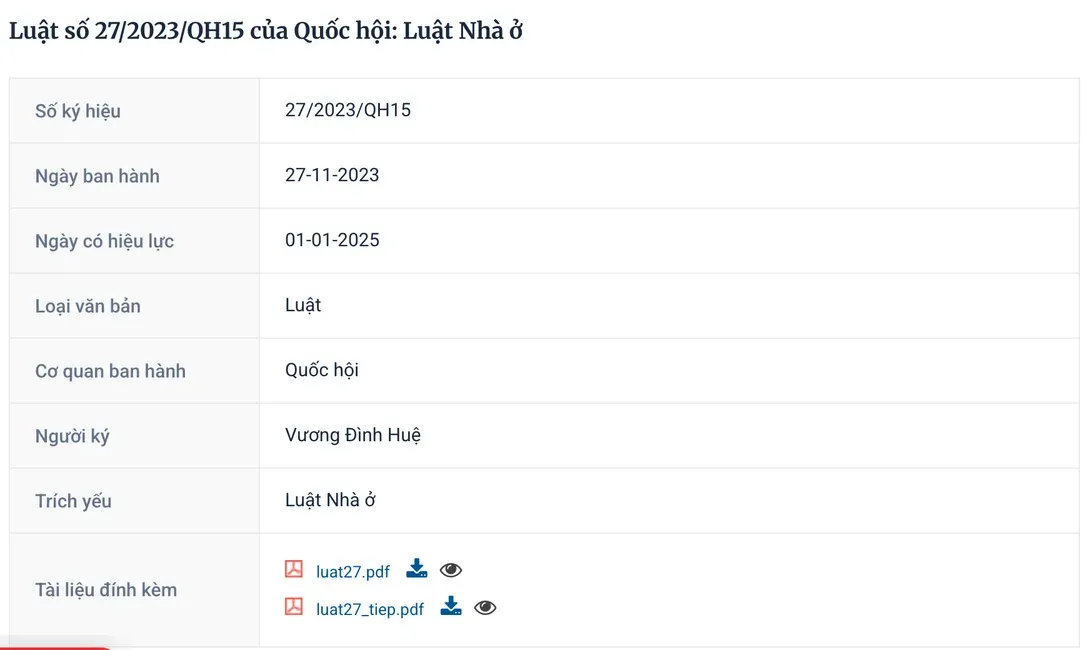
Foreign organizations and individuals may own housing in a housing-construction investment project under Article 17 of the Law on Housing, except a project in an area requiring national defence and security assurance under Vietnamese law. For an individual, that means being a foreign individual permitted to enter Vietnam, who doesn’t fall under a case entitled to diplomatic or consular privileges or immunities.
If you’re not sure whether your visa status counts as “permitted to enter Vietnam,” check the Vietnam e-visa rules or the Vietnam visa exemption list for your nationality.
What you’re allowed to buy, and where
As an eligible individual, you may own housing by buying, hire-purchasing, being given, or inheriting commercial housing from the developer of a housing-construction investment project, provided the project isn’t in an area requiring national defence and security assurance. The Ministry of National Defence and the Ministry of Public Security notify which areas require that assurance; on that basis, the provincial People’s Committee determines the list of housing projects in its locality where foreign organizations and individuals are permitted to own housing, and publicly announces this list on the provincial People’s Committee’s web portal, sending it to the provincial housing management agency to post on that agency’s own web portal too. If a project’s site is only partly outside those restricted areas, the People’s Committee marks out just the portion where foreigners may own housing, matching the defence and security notice.
The ownership limits
Two separate quotas apply — one for apartments, one for stand-alone houses.
For one apartment building, including a mixed-use building, foreign organizations and individuals may own at most 30% of the apartments with a residential purpose in that building; where the building has several blocks or towers sharing a common podium, the 30% cap applies to each block or tower separately. For stand-alone houses, the cap works by area rather than by building: not more than 250 houses in one area with a population equivalent to one ward, defined as 10,000 people; if that area has two or more housing projects, foreigners may own housing across all of them but not more than 250 houses in total, and once they’ve already owned the full permitted number, they may not own additional stand-alone houses at the other projects in that area.
How long you own it, and extending the term
You own the housing as agreed in the sale, hire-purchase, gift or inheritance transaction, but not more than 50 years from the date the Certificate is issued, extendable once for up to 50 more years if you need to; the ownership term must be stated in the Certificate itself. If you want to extend, send the dossier — directly, by post, or online — to the provincial People’s Committee where the housing is located, at least 3 months before your term expires. The People’s Committee then has up to 30 days from receiving a valid dossier to check it and, if you still meet the required subject and conditions under the Law on Housing, approve one extension of up to 50 years, counted from the ownership term first recorded on your Certificate.
Marrying a Vietnamese citizen changes your rights
If you marry a Vietnamese citizen living in Vietnam, you get the same ownership rights and obligations as a Vietnamese citizen over the housing. If you marry a person of Vietnamese origin living abroad who is permitted to enter Vietnam, you get the same rights and obligations as a person of Vietnamese origin living abroad.
What you can do with your apartment
A foreign owner has the rights of an owner, as a Vietnamese citizen has, subject to the rules for foreign owners. An owner may sell, hire-purchase out, give, exchange, bequeath, mortgage, or contribute the housing as capital, assign your sale-and-purchase contract, lease it out, lend it, let someone stay in it free of charge, or authorize someone else to manage it, among other rights the law provides. If you lease it out, you may do so for a purpose the law doesn’t prohibit, but before leasing you must give the housing management agency written notice of the lease, as the Minister of Construction prescribes, and you must pay tax on the rental income. Before your ownership term expires, you — directly or through someone you authorize — may give or sell the housing to a person or entity eligible to own housing in Vietnam; if the term expires and you haven’t sold or given it away, the housing becomes public asset.
Getting your Certificate
Once you meet the conditions and lawfully own the housing, the State recognises you as owner by issuing a Certificate of land-use rights, house ownership and other assets attached to land — the Certificate — except where the housing is public asset. Under the Land Law, this Certificate is the state’s legal instrument confirming lawful land-use rights and ownership of assets attached to land, including housing on it. To get it, you need proof you belong to the class of people eligible to own housing in Vietnam: a foreign passport that’s still valid and bears a Vietnam entry stamp, or an equivalent legal entry document, current when you sign the housing transaction, plus a written commitment that you don’t hold diplomatic or consular privileges or immunities.
As a foreign individual owner, if you don’t separately hold land-use rights over the plot the housing sits on, your Certificate is issued based on the paperwork on your housing transaction under the law on housing. The Land Law’s own list of land users doesn’t name foreign individuals as such — it covers domestic organizations, economic organizations, religious organizations, Vietnamese citizens and overseas Vietnamese, residential communities, foreign organizations with a diplomatic function, persons of Vietnamese origin residing abroad, and foreign-invested economic organizations.
Paying for the apartment
You must pay for the purchase or hire-purchase of housing through a credit institution or foreign bank branch operating in Vietnam — see how to open a bank account in Vietnam as a foreigner.
Fees and tax
Registering the housing and land attracts a registration fee of 0.5%. If you later sell, personal income tax on the transfer is determined as the transfer price multiplied by a 2% rate — the same rate for a resident individual and a non-resident individual — see Vietnam’s tax residency test for which one you are.
How Da Nang’s approved list gets updated
Within 6 months of Decree 95/2024/NĐ-CP taking effect, the Ministry of National Defence and the Ministry of Public Security had to pin down the defence-and-security areas in each province and city and notify the provincial People’s Committee, which then had up to 15 days to determine the list of projects to allow. Da Nang updates its list in batches. In the most recent one, batch 7 (16 April 2026), the city’s Department of Construction received the city People’s Committee’s official dispatch on publishing the list, dated 3 April 2026; the People’s Committee agreed to add the Riverside Tower project (Tháp ven sông), developed by The Royal Đà Nẵng One-Member Co., Ltd., and the DaNang Landmark commercial-centre-and-apartment complex, developed by Cosmos Housing Joint Stock Company, to the list of projects permitting foreign ownership.
If you’re given or inherit housing you can’t fully own
If you’re given housing or inherit it outside the case the law allows for foreign owners, or beyond the 30%-per-building or 250-house quantities set out above, or in an area requiring national defence and security assurance, you’re only entitled to the value of that housing, not the housing itself. A foreign organization not operating in Vietnam, or a foreign individual not permitted to enter Vietnam, who is given or inherits housing here is not issued a Certificate for it and may only sell or give it to a person or entity eligible to own housing in Vietnam. And if a competent Vietnamese authority orders you to exit Vietnam or expels you, or forces a foreign organization to stop operating here for breaking Vietnamese law in how it used its own housing, that housing is dealt with according to that authority’s decision.
For more on money matters as a foreigner in Vietnam, see the money section.
Step by step
- Confirm eligibilityYou must be a foreign individual permitted to enter Vietnam, and not entitled to diplomatic or consular privileges or immunities.
- Find a project on the province's published listBuy commercial housing from the developer of a housing project that the provincial People's Committee has determined and published, outside areas requiring national defence and security assurance.
- Check the building's foreign-ownership quotaForeign organizations and individuals may own at most 30% of the apartments with a residential purpose in that building, counted per block where the building has several.
- Provide proof of eligibilityHave a valid foreign passport bearing a Vietnam entry stamp, or an equivalent legal entry document, plus a written commitment that you don't hold diplomatic or consular privileges or immunities.
- Pay through a bank operating in VietnamMake payment through a credit institution or foreign bank branch operating in Vietnam.
- Get your CertificateOnce recognised as owner, you're issued a Certificate of land-use rights, house ownership and other assets attached to land, stating your ownership term.
- Extend before the term expires, if you want to keep itAt least 3 months before your ownership term expires, send the extension dossier to the provincial People's Committee; it decides within 30 days, for one extension of up to 50 more years.
Not confirmed: How many projects, and how many apartments in total, are on Da Nang's full foreign-ownership list is not confirmed from an official source beyond the most recent addition. Whether the rules on foreign ownership of stand-alone houses will change is unconfirmed — no official draft text was found; the Law on Housing quoted here is the law in force today. Which agency now receives a foreign owner's notice before leasing housing out, since the district level was abolished, was not found in any text checked for this article.
Common questions
Can a tourist buy an apartment in Da Nang?
The Law on Housing's test for an individual is being a foreign individual permitted to enter Vietnam who does not hold diplomatic or consular privileges or immunities; it does not list visa types.
How many apartments can foreigners own in one building?
At most 30% of the apartments with a residential purpose in one building; where the building has several blocks or towers on a shared podium, the 30% cap applies to each block or tower separately.
How long can I own an apartment in Vietnam as a foreigner?
Up to 50 years from the date you're issued the Certificate, and you may extend once for up to 50 more years if you need to.
How do I extend my ownership before it expires?
At least 3 months before the term expires, send the extension dossier to the provincial People's Committee where the housing is located; it checks the dossier and decides within 30 days.
Can I rent out my apartment?
Yes, for a purpose the law doesn't prohibit, but you must give the housing management agency written notice before leasing it out, and pay tax on the rental income.
How do I pay for the apartment?
Through a credit institution or foreign bank branch operating in Vietnam.
What tax do I pay if I sell?
Personal income tax of 2% of the transfer price, the same rate for a resident individual and a non-resident individual; the registration fee for housing and land is 0.5%.
Which Da Nang projects are currently on the approved list?
The city's most recent addition, batch 7 (16 April 2026), added the Riverside Tower project (Tháp ven sông), developed by The Royal Đà Nẵng One-Member Co., Ltd., and the DaNang Landmark commercial-centre-and-apartment complex, developed by Cosmos Housing Joint Stock Company.
Next in Money & admin
- Landlord Charging Too Much for Electricity in Vietnam? Here's the Legal Price (2026)Verified
- How to Open a Bank Account in Vietnam as a Foreigner (2026)Verified
- Driving in Vietnam as a Foreigner: Licence, IDP and Conversion RulesVerified
- Social Insurance for Foreigners in Vietnam: Rates and Rules (2026)Verified
General information checked against the sources listed above, not legal advice for your situation. Rules and office practice change; confirm with the immigration office or a licensed adviser before you act. See how guides are checked.
Spotted an error? Report it.