Vietnam Visa Exemption Countries in 2026: Who Gets How Many Days
Vietnam waives visas for 12 named countries, including Germany and France, for 45 days through 14 March 2028, and for tourists from 12 more European countries for 45 days through 14 August 2028. Bilateral deals give 14 to 90 days; Phu Quoc arrivals get 30 days.
These are the visa exemptions for ordinary passports listed in Vietnam’s two exemption resolutions and in the Foreign Ministry’s directory, which was last updated 14 March 2025, with the longest stay each one allows.
| Countries / status | Maximum stay | Basis |
|---|---|---|
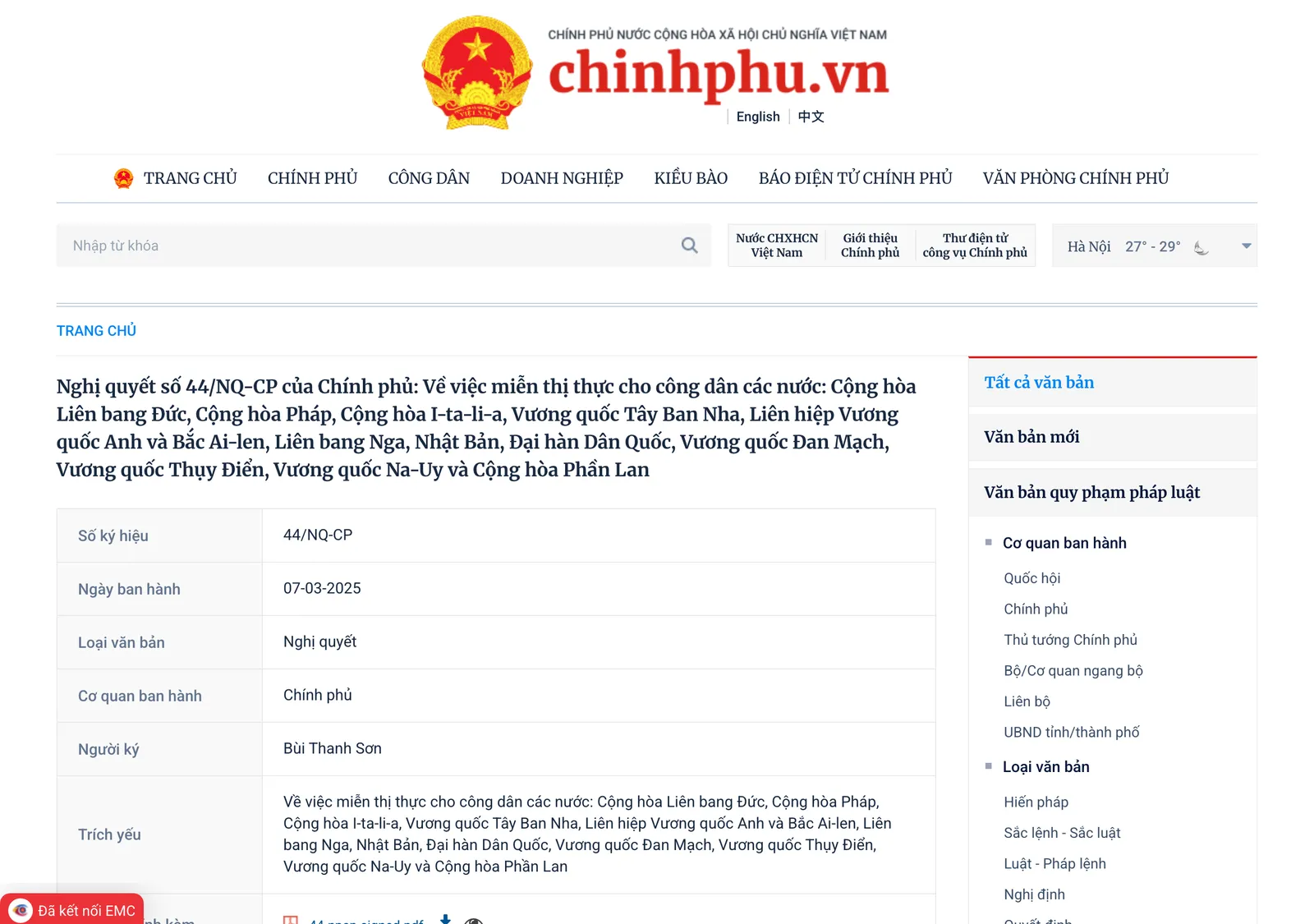
| Germany, France, Italy, Spain, United Kingdom and Northern Ireland, Russia, Japan, South Korea, Denmark, Sweden, Norway, Finland | 45 days | Resolution 44/NQ-CP, through 14 March 2028. |
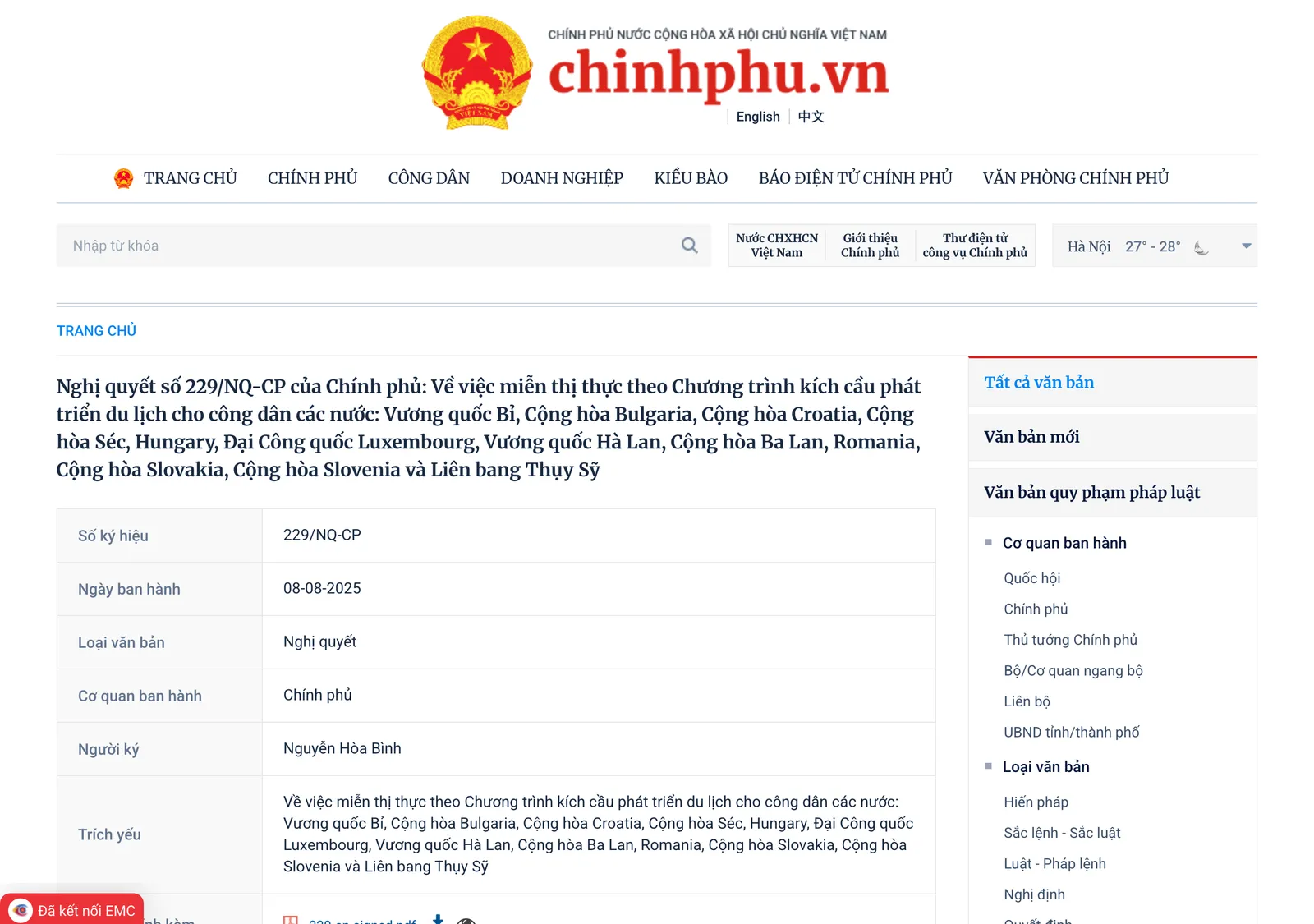
| Belgium, Bulgaria, Croatia, Czechia, Hungary, Luxembourg, Netherlands, Poland, Romania, Slovakia, Slovenia, Switzerland | 45 days, tourism only | Resolution 229/NQ-CP, through 14 August 2028. |
| Cambodia, Indonesia, Laos, Singapore, Thailand | 30 days | Bilateral agreement. |
| Malaysia | 30 days, listed purposes only | Bilateral agreement. |
| Myanmar | 30 days | Bilateral agreement (mutual). |
| Philippines | 21 days | Bilateral agreement. |
| Brunei | 14 days | Bilateral agreement. |
| Chile, Panama | 90 days, not for paid work | Bilateral agreement. |
| Belarus | 30 days, up to 90 days per calendar year | Bilateral agreement. |
| Kazakhstan | 30 days per entry | Bilateral agreement. |
| Kyrgyzstan | 30 days | Bilateral agreement. |
| Mongolia | 30 days, not for paid work | Bilateral agreement. |
| Arrivals directly on Phu Quoc island, any nationality | 30 days | Decision 80/2013/QĐ-TTg. |
| Overseas Vietnamese and relatives holding the visa exemption certificate | 6 months per entry | Decree 82/2015/NĐ-CP. |
Resolution 44/NQ-CP: exemption for a fixed list of countries
Resolution 44/NQ-CP names Germany, France, Italy, Spain, the United Kingdom and Northern Ireland, Russia, Japan, South Korea, Denmark, Sweden, Norway and Finland. Citizens of these countries get 45 days from entry.
Resolution 229/NQ-CP: a tourism-only exemption
Resolution 229/NQ-CP covers a separate list: Belgium, Bulgaria, Croatia, Czechia, Hungary, Luxembourg, the Netherlands, Poland, Romania, Slovakia, Slovenia and Switzerland. It also gives 45 days, but only for tourism.
ASEAN and other bilateral exemptions
Outside the two nationwide resolutions above, Vietnam has separate bilateral exemptions with its ASEAN neighbors and a few other countries, each with its own stay length. Cambodian, Indonesian, Lao, Singaporean and Thai ordinary-passport holders are exempt for up to 30 days. Malaysians also get 30 days, but only for the purposes their agreement lists, such as tourism, visiting relatives, trade negotiations, investment, sport and conferences. Myanmar citizens get the same 30 days under a mutual agreement. Philippine passport holders get 21 days, and Bruneian passport holders get 14 days. Outside ASEAN, Chilean and Panamanian ordinary-passport holders get up to 90 days, as long as the visit isn’t for paid work. Belarusians get 30-day stays, up to 90 days in a calendar year. Kazakh citizens get 30 days per entry, Kyrgyz citizens 30 days, and Mongolian citizens 30 days, provided the visit isn’t for paid work.
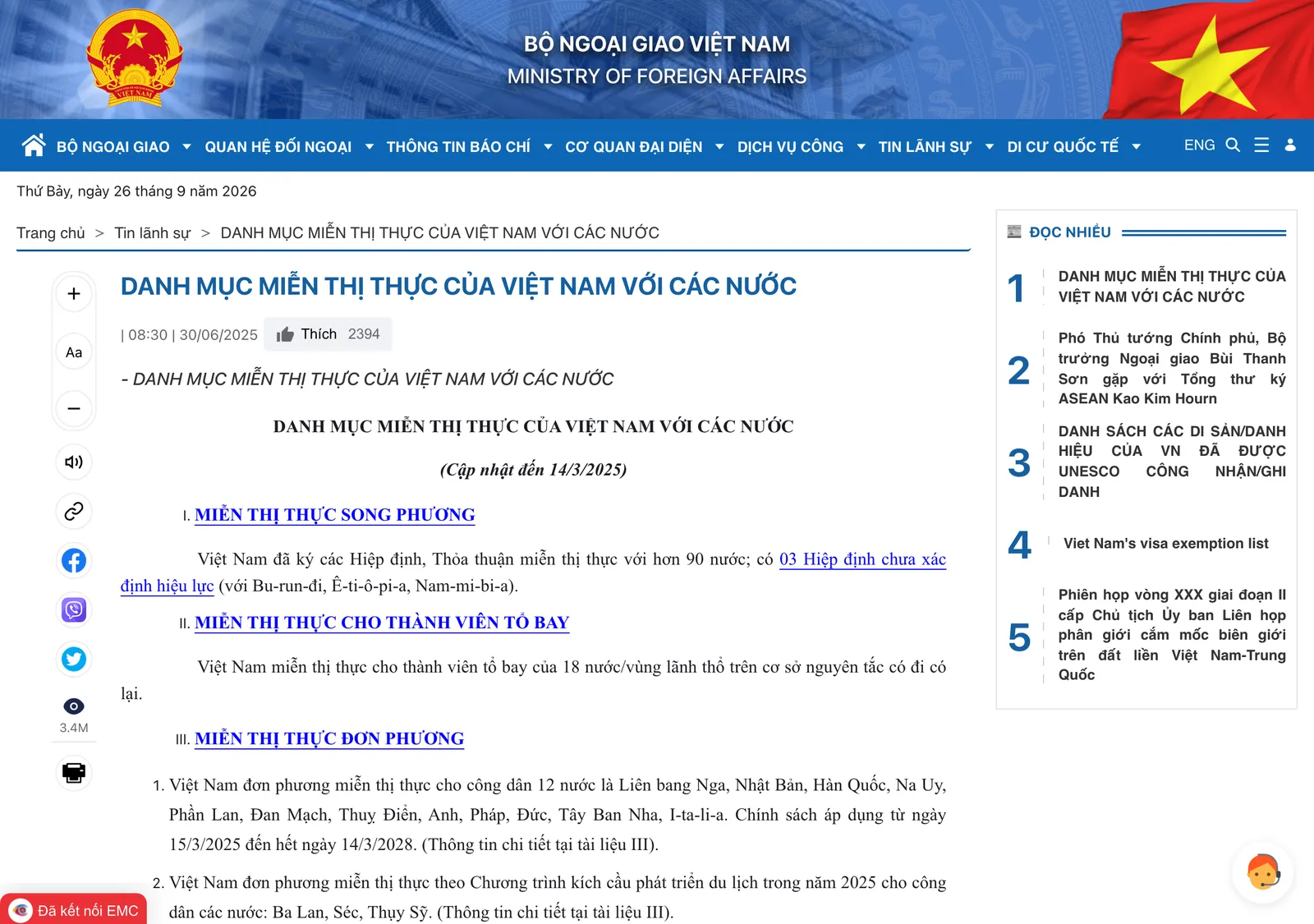
For Indonesia, the Foreign Ministry’s directory also says the visa-free stay cannot be extended. It still lists the 30-day exemption, though the directory was last updated 14 March 2025, and I found no official text behind reports elsewhere of a cut.
Vietnam and Timor-Leste signed a new bilateral visa exemption agreement for ordinary-passport holders in June 2026, though its stay length and effective date haven’t been published yet.
Not on any of these lists? An e-visa is the usual alternative for most other nationalities.
Phu Quoc Island: a separate rule
Phu Quoc island runs on its own rule, separate from every list above. Foreigners and foreign-passport-holding Vietnamese who enter, exit or stay directly on Phu Quoc island are visa-exempt for up to 30 days. Arrive anywhere else in Vietnam and this rule doesn’t apply — you fall under the country-based exemptions above, an e-visa, or a regular visa instead.
The exemption certificate for overseas Vietnamese
Overseas Vietnamese and their relatives holding the visa exemption certificate, issued under Decree 82/2015/NĐ-CP, get a 6-month temporary residence certificate for each entry. If you want to stay longer than that on a single trip, your sponsor can apply to extend it, provided you have a valid reason. For a longer-term option than repeated 6-month stays, see how to get a temporary residence card in Da Nang.
What happens when your exempt stay runs out
Every exemption above has a limit. If you want to stay longer, your sponsor, not you, has to apply to the immigration authority for an extension — and Indonesia’s agreement, for one, rules an extension out. If a Vietnamese individual sponsors you, they must be your grandparent, parent, spouse, child or sibling — never a friend. The extension itself costs US$10; see the full fee schedule for every other visa and residence fee.
Miss the deadline and you’re overstaying. Fines rise with how long you’ve overstayed — an overstay under 16 days costs 500,000-2,000,000 VND, and the longest overstays are fined up to 30,000,000-40,000,000 VND. Overstaying more than 16 days may also lead to deportation, decided case by case.
For the full extension process step by step, see how to extend a visa in Da Nang; your sponsor files it at the Da Nang Immigration Office. If you’d rather not handle the paperwork yourself, compare using an agent versus doing it yourself.
For every other visa, extension and residence-card guide, start at the Da Nang visa hub.
Common questions
Do I need a visa if my country isn't on either resolution's exemption list?
Possibly not — check the bilateral list first, since neighbors like Cambodia, Laos and Singapore have their own 30-day exemptions. If your country isn't exempt at all, an e-visa is the usual route.
Can I extend my visa-free stay once it runs out?
Only through a sponsor: the inviting organisation or individual has to apply to the immigration authority for you, and the decision is the authority's. Some agreements rule it out — Indonesia's says the visa-free stay cannot be extended.
What happens if I overstay after my exempt entry expires?
You're fined based on how long you overstayed — as little as 500,000-2,000,000 VND for under 16 days — and you may face deportation for a longer overstay.
Does the Phu Quoc exemption apply if I fly into Da Nang instead?
No — it only covers foreigners and foreign-passport-holding Vietnamese arriving, departing or staying directly on Phu Quoc island. Arrive anywhere else and the country-based exemptions apply instead.
Is Indonesia still on Vietnam's visa exemption list?
The Foreign Ministry's directory, last updated 14 March 2025, still lists Indonesian ordinary-passport holders as exempt for up to 30 days. I found no official text confirming the cut reported elsewhere.
How long can I stay in Vietnam with the exemption certificate for overseas Vietnamese?
Each entry gives you a 6-month temporary residence certificate, which your sponsor can apply to extend if you have a valid reason to stay longer.
General information checked against the sources listed above, not legal advice for your situation. Rules and office practice change; confirm with the immigration office or a licensed adviser before you act. How these guides are checked: about Da Nang Oi.