Send Money To and From Vietnam as a Foreigner (2026 Rules)
A non-resident, or a resident who is a foreigner, may transfer the foreign currency in their account abroad. With lawful dong income, the same person may buy foreign currency and transfer it. The bank checks your papers. Tax-completion papers are not required for current transactions, but the law does not say whether sending your own salary counts as one.
On this page
Before a licensed bank in Vietnam sells, transfers or confirms the source of foreign currency for you to carry abroad, it must examine the papers you present. It judges each transfer by its actual and reasonable need. Here is the rule.
Tổ chức tín dụng được phép có trách nhiệm xem xét các chứng từ, giấy tờ do người cư trú, người không cư trú xuất trình để bán, chuyển, xác nhận nguồn ngoại tệ tự có hoặc mua từ tổ chức tín dụng được phép để mang ra nước ngoài căn cứ vào yêu cầu thực tế, hợp lý của từng giao dịch chuyển tiền.
A licensed credit institution must examine the documents that a resident or non-resident presents to sell, transfer or confirm the source of own or purchased foreign currency for carrying abroad, based on the actual and reasonable need of each transfer.
Nghị định 70/2014/NĐ-CP, Điều 7 khoản 4
Which foreigners can send money abroad
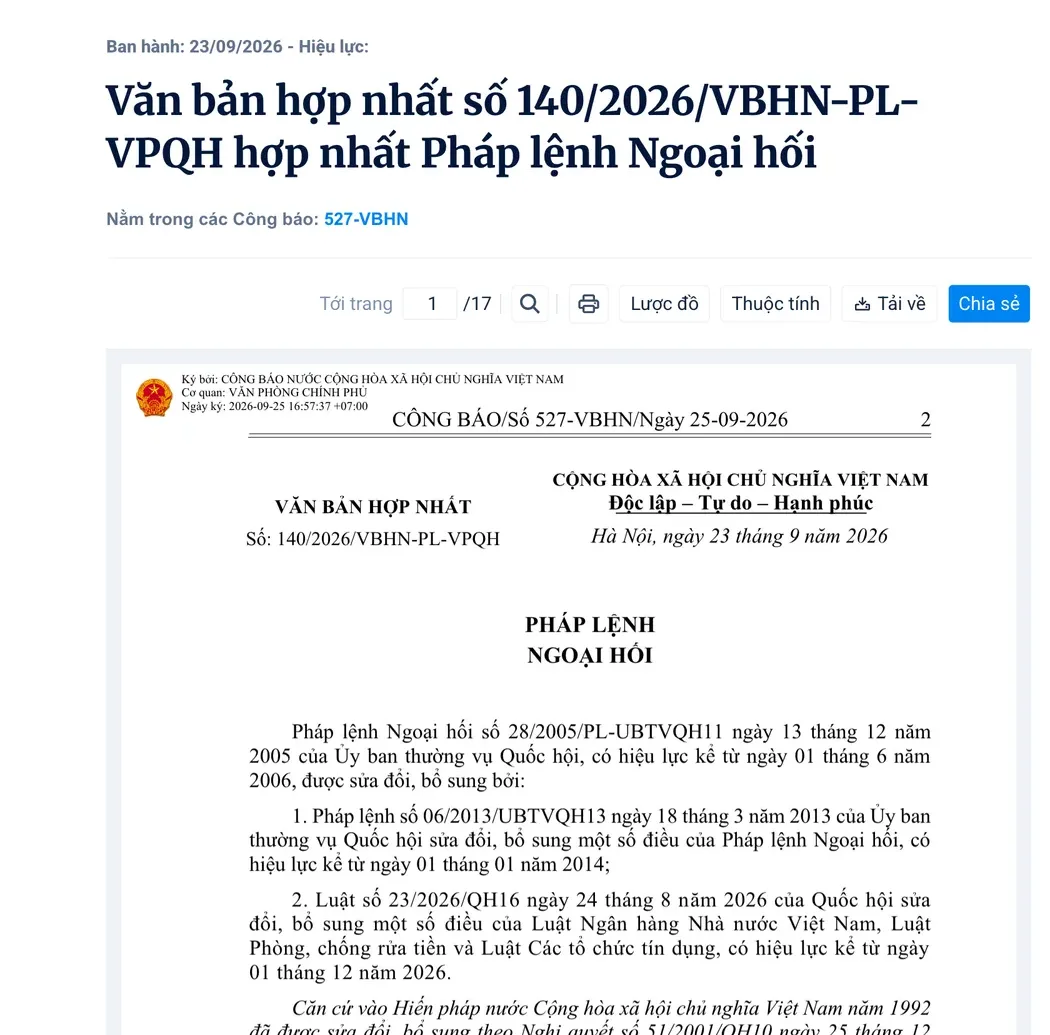
A non-resident, or a resident who is a foreigner, may send money abroad under the same rule. The Foreign Exchange Ordinance and Decree 70/2014/NĐ-CP both say so.
Người không cư trú, người cư trú là người nước ngoài có ngoại tệ trên tài khoản hoặc các nguồn thu ngoại tệ hợp pháp được chuyển, mang ra nước ngoài; trường hợp có nguồn thu hợp pháp bằng đồng Việt Nam thì được mua ngoại tệ để chuyển, mang ra nước ngoài.
A non-resident, or a resident who is a foreigner, who has foreign currency in an account or lawful foreign-currency income may transfer or carry it abroad; with lawful Vietnamese-dong income the person may buy foreign currency to transfer or carry abroad.
Nghị định 70/2014/NĐ-CP, Điều 7 khoản 3
The Ordinance has the same rule for foreign currency in an account and for buying it with lawful dong income.
Resident or non-resident
The rule names both groups. The Ordinance defines the two groups.
- A foreigner permitted to reside in Vietnam for 12 months or longer is a resident.
- A foreigner in Vietnam to study, receive medical treatment or travel is not a resident, whatever the length of stay.
- A foreigner working for a diplomatic or consular mission, an international-organisation office or a foreign organisation’s representative office in Vietnam is not a resident either.
- A non-resident is anyone not listed among the residents.
Circular 20/2022 covers Vietnamese citizens
Circular 20/2022/TT-NHNN lets a resident who is a Vietnamese citizen buy, transfer and carry foreign currency abroad for the one-way transfer purposes in Decree 70/2014/NĐ-CP. It names Vietnamese citizens, so this article does not apply it to foreigners.
What you can send
Foreign currency you hold
Foreign currency in an account, or lawful foreign-currency income, may be transferred or carried abroad. Foreign-currency cash you hold may also be kept, carried, given, sold to a licensed bank, or transferred or carried abroad under the decree.
Dong income
With lawful income in Vietnamese dong, you may buy foreign currency to transfer or carry abroad. The clauses above describe buying foreign currency first and sending that currency.
One-way transfers
A one-way transfer is a transfer from abroad into Vietnam, or from Vietnam abroad, through a bank or the public postal network of a public-utility postal operator. It is of a gift or aid nature or helps family relatives, for personal spending. It is not tied to payment for exports or imports of goods and services. Foreign exchange may not be sent in postal items.
Papers and tax
You must present the documents the credit institution requires, and you answer before the law for their accuracy. The bank sets which papers it wants, within its duty to examine them.
One-way transfers are among the current transactions. For current transactions you do not have to present documents confirming that you have completed your tax obligations to the Vietnamese State.
The ordinance defines a one-way transfer by its purpose: aid, help for family relatives or personal spending. It does not say whether a foreigner sending their own salary home falls under that definition. Ask the bank how it classes your transfer before you rely on the tax rule.
Khi mua, chuyển, mang ngoại tệ ra nước ngoài phục vụ các giao dịch vãng lai, người cư trú, người không cư trú không phải xuất trình các chứng từ liên quan đến việc xác nhận hoàn thành nghĩa vụ thuế với Nhà nước Việt Nam.
When buying, transferring or carrying foreign currency abroad for current transactions, residents and non-residents do not have to present documents confirming that they have completed their tax obligations to the Vietnamese State.
Nghị định 70/2014/NĐ-CP, Điều 4 khoản 3
Tax on your income is a separate topic: Vietnam tax residency.
Steps to send money abroad at a bank
- Decide what you will send: foreign currency you hold in an account, or foreign currency bought with lawful dong income.
- Ask the bank which papers it needs; they are the ones the credit institution requires.
- Bring your identity paper and proof that the money is lawful income.
- Present the papers; you answer before the law for their accuracy.
- Expect the bank to examine them for each transfer.
- Pay the bank’s fee, shown in the table below.
What two banks publish
These are bank practice, not law. The law leaves the documents to the bank.
Vietcombank
Vietcombank’s undated counter guide says it applies to Vietnamese and foreign individuals transacting at Vietcombank. For a non-resident or a resident foreign individual transferring lawful income abroad, it lists:
- The sender’s identity paper.
- A paper proving non-resident status or foreign nationality.
- A paper proving the money is lawful income, such as an employment contract and salary account statements.
The amount is set by the sender’s request, on the basis of proof that the money is lawful income.
BIDV
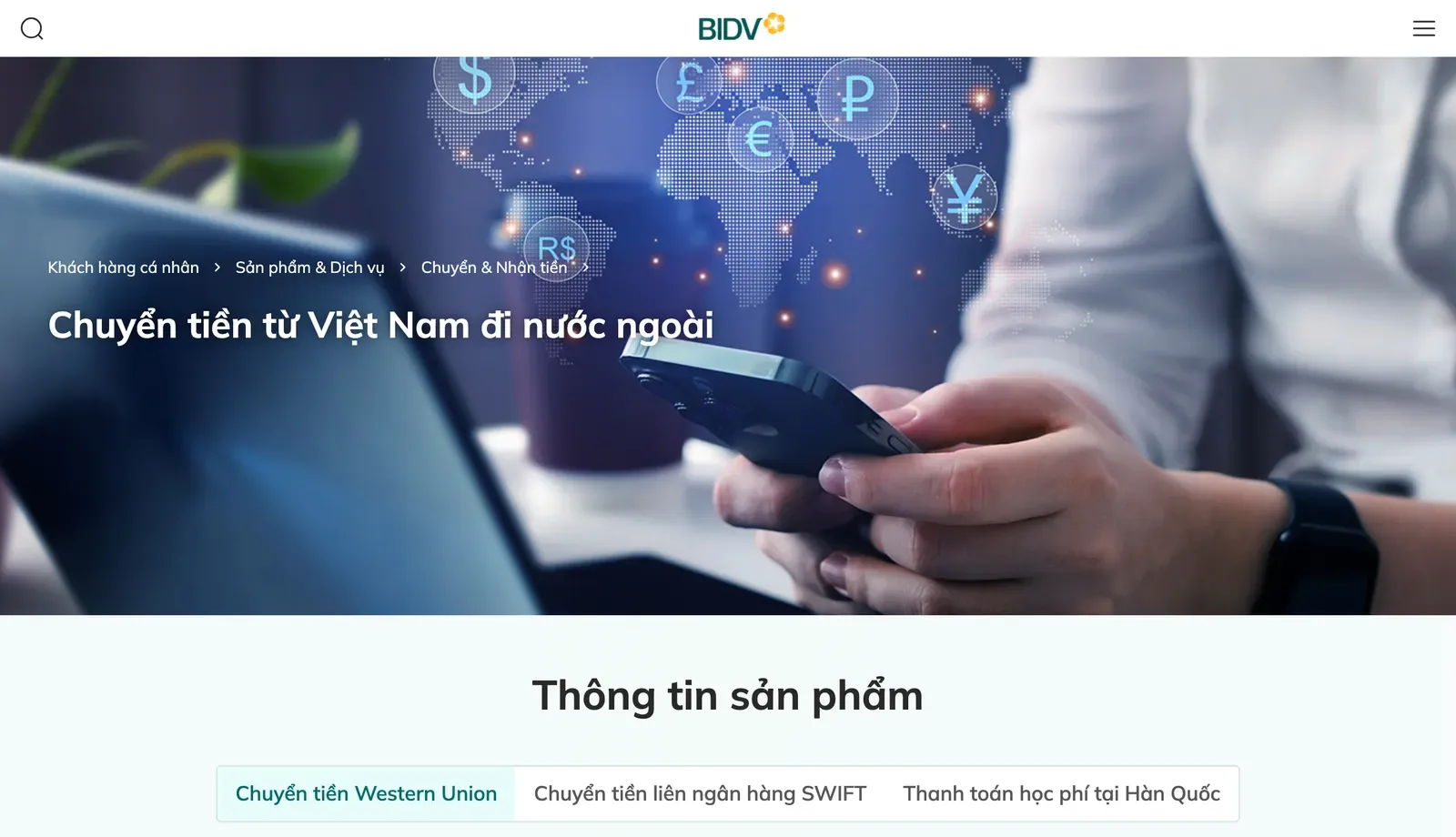
BIDV’s undated page lists a valid passport and, for a foreign individual, a temporary or permanent residence card in Vietnam. It also lists papers proving the purpose of the transfer.
Outward-transfer fees
| Bank | Fee | Minimum | Maximum | Schedule date |
|---|---|---|---|---|
| Vietcombank, its own transfer fee | 0.2% | US$5 | US$300 | From 1 June 2026 |
| BIDV, other purposes, plus telex fee | 0.2% | US$5 | US$5,000 | From 10 May 2025 |
BIDV’s schedule date is 10 May 2025, so check its current schedule before you send.
Receiving money from abroad
A resident individual in Vietnam may keep foreign currency from one-way transfers or carry it on the person. The individual may also deposit it in a foreign-currency account at a licensed credit institution, or sell it to one. A foreigner permitted to reside for 12 months or longer is a resident. In addition, a Vietnamese citizen may deposit it as foreign-currency savings.
A non-resident individual may credit a foreign-currency account with money transferred in from abroad. The bank account guide covers opening one.
What banks say about receiving
These are marketing pages, undated, and they do not mention foreigners as receivers.
- Vietcombank’s English page says SWIFT receipts are accepted in VND, USD or other currencies it accepts, and receiving into a bank account or cashing out at its counters is free.
- BIDV’s page says SWIFT transfers support many currencies with no limit on the amount received, and are free when received in VND.
- BIDV’s page says money sent through Western Union can be received free at its branches nationwide, in VND or USD.
Transfer services that send to Vietnam
Wise, Western Union and Remitly each describe sending money to Vietnam. Wise’s UK page says the sender pays in US dollars and the recipient gets Vietnamese dong. Western Union’s US page says it transfers directly to accounts at all major banks in Vietnam. Remitly’s US page lists cash pickup, bank deposit and mobile wallet.
Accounts, cash and the next steps
A resident foreigner’s foreign-currency account may be credited with salary, bonus or allowance payments and debited to transfer money abroad. A non-resident individual’s foreign-currency account may be debited to transfer money abroad. A dong account may be debited to buy foreign currency at a licensed credit institution to transfer abroad.
Cash is a separate route. An individual leaving Vietnam with cash or gold above the State Bank level must declare it to customs at the border gate. By passport, the cash thresholds are US$5,000 or the equivalent, and VND 15,000,000. Fines and gold limits: Vietnam cash declaration thresholds.
Tax on the salary itself: income tax for remote workers in Vietnam.
Step by step
- Decide what you will sendSend foreign currency you hold in an account, or buy foreign currency with lawful dong income and send that.
- Ask the bank which papers it needsThe papers are the ones the credit institution requires. The bank examines them for each transfer.
- Bring identity and proof of incomeVietcombank's counter guide lists an identity paper and proof of lawful income, such as an employment contract and salary account statements.
- Present the papersYou answer before the law for the accuracy of the papers you present.
- Ask about tax papersFor current transactions you do not have to present documents confirming completed tax obligations. Ask the bank how it classes your transfer.
- Check the feeVietcombank's own fee is 0.2%, minimum US$5, maximum US$300, from 1 June 2026.
Not confirmed: Which papers a Da Nang branch asks a foreigner for: bank pages name an employment contract, salary statements and an identity paper, so bring those. Whether a foreigner may send dong itself abroad: the rule describes buying foreign currency first. Whether Wise, Western Union or Remitly accept senders in Vietnam: ask each provider first.
Common questions
Can a foreigner transfer a salary abroad from Vietnam?
A non-resident, or a resident who is a foreigner, may buy foreign currency with lawful dong income and transfer it abroad. The bank examines the papers you present, based on the actual and reasonable need of each transfer.
Do I need a tax paper to send money abroad?
For current transactions you do not have to present documents confirming that you have completed your tax obligations to the Vietnamese State. One-way transfers are among the current transactions. The ordinance defines a one-way transfer by its purpose, such as aid, help for family or personal spending, and does not name a foreigner's own salary.
What documents does a Vietnamese bank ask a foreigner for?
The documents are the ones the bank requires. Vietcombank's counter guide lists an identity paper, a paper proving non-resident status or foreign nationality, and proof of lawful income. BIDV lists a valid identity paper and papers proving the purpose.
Is there a limit on how much a foreigner can send?
Vietcombank's counter guide sets the amount by your request, on proof that the money is lawful income. That is one bank's guide, not a legal rule.
How much does Vietcombank charge to send money abroad?
Its own transfer fee on the schedule from 1 June 2026 is 0.2% of the transaction value, minimum US$5, maximum US$300.
Can I receive money from abroad in Vietnamese dong?
Vietcombank's English page says SWIFT receipts are accepted in VND, USD or other currencies it accepts. BIDV's page says SWIFT receipts are free when received in VND.
Can I use Wise, Western Union or Remitly to send money out of Vietnam?
Their pages describe sending money to Vietnam from the UK or the US. Ask the provider whether it accepts a sender located in Vietnam.
Can I carry the cash out instead?
An individual leaving Vietnam with cash above the State Bank level must declare it to customs at the border gate. By passport the cash thresholds are US$5,000 or the equivalent, and VND 15,000,000.
Next in Money & admin
General information checked against the sources listed above, not legal advice for your situation. Rules and office practice change; confirm with the immigration office or a licensed adviser before you act. See how guides are checked.
Spotted an error? Report it.