Da Nang Typhoon Season: What to Expect
The legal flood season for Da Nang's stretch of coast runs 1 September to 15 December, and the national forecasting centre expected 2024's storms there to concentrate from October to December. National risk levels 3 to 5 grade storms by wind force and region. Past storms brought sea bans, stay-home advisories, evacuations and school closures.
On this page
On 26 October 2024, as Storm No. 6 (Trà Mi) closed in on the central coast, Da Nang’s chairman issued this instruction.
hạn chế ra khỏi nhà bắt đầu từ 10h ngày 27/10
“Residents were told to limit leaving home starting from 10am on 27 October 2024.”
Da Nang’s chairman, storm-response directive, quoted by Báo Chính phủ
Orders like this are dated and tied to one storm. This guide covers when the season runs, how Vietnam’s storm-warning system works, what past storms have made the city order, what happens to flights, and what the law itself asks of you.
When Da Nang’s typhoon season runs
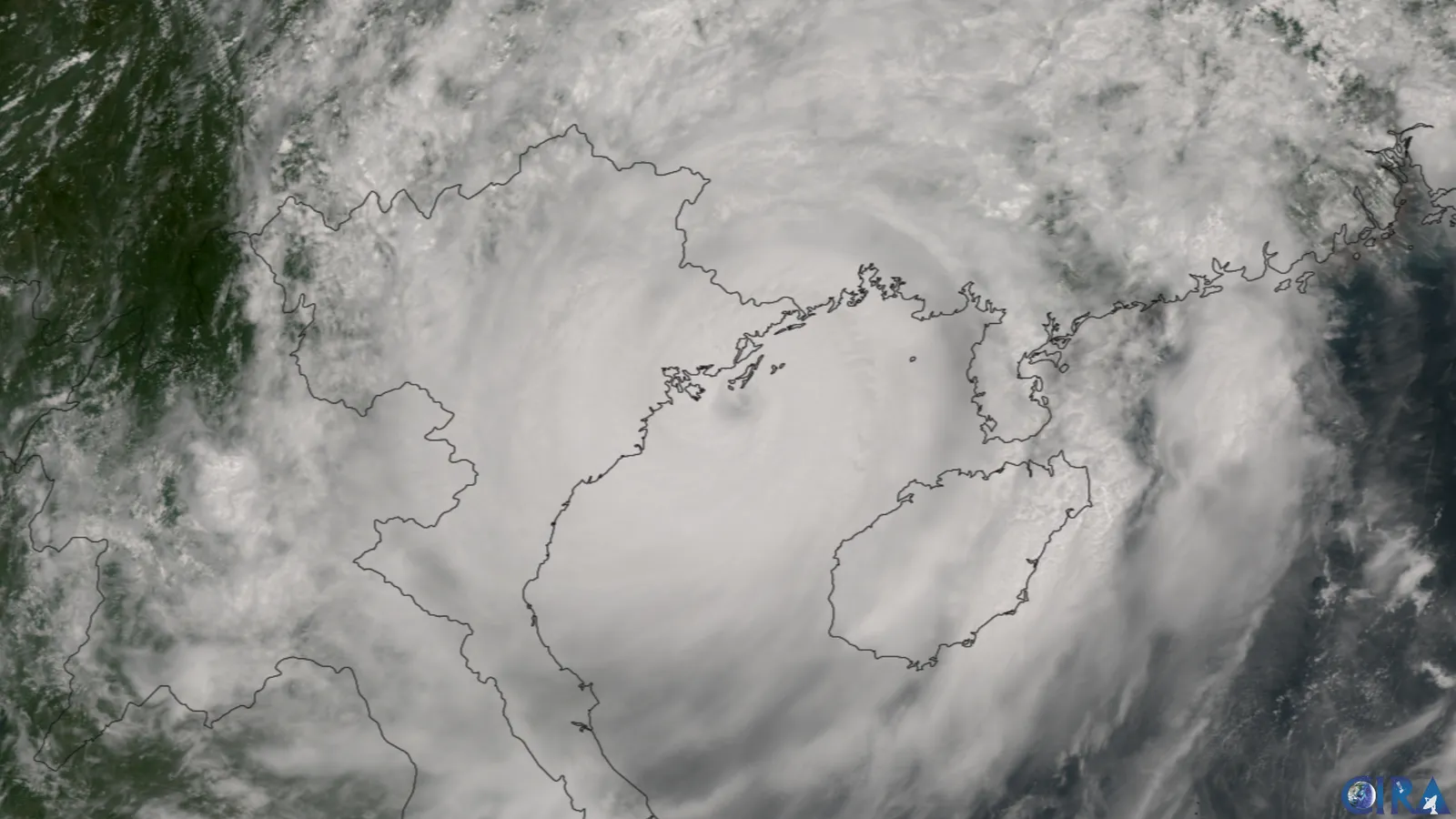
In June 2024, the head of weather forecasting at Vietnam’s national forecasting centre said typhoon and tropical-depression activity that year was likely to concentrate from October to December in the Trung Trung Bộ and Nam Trung Bộ regions. A separate legal definition sets the flood season for rivers from Quảng Bình to Ninh Thuận province, the same stretch of central coast, running from 1 September to 15 December each year.
.png)
How Vietnam’s storm warnings work
The rules for how these warnings work come from the Prime Minister’s Decision 18/2021/QĐ-TTg.
Risk levels for Da Nang’s region
Storms that threaten Da Nang’s region are graded at national disaster risk level 3, 4 or 5, depending on wind force and which regions are forecast to be hit.
What a storm bulletin contains
A storm bulletin’s summary of current conditions must state the storm centre’s position by latitude and longitude to a tenth of a degree, its distance to the nearest island or a named place on the mainland, its strength in Beaufort wind-force for both the strongest wind and gusts, its direction as one of 16 compass points, and its speed in km/h. An emergency storm bulletin is issued once a storm is likely to directly affect Vietnam’s mainland within the next 48 hours. During an emergency bulletin, the issuing authority must publish 8 main bulletins a day, at 02:00, 05:00, 08:00, 11:00, 14:00, 17:00, 20:00 and 23:00.
Who issues the bulletins
Under the Decision, the Vietnam Meteorology and Hydrology Administration — part of the Ministry of Natural Resources and Environment — issues the official forecast and warning bulletins and risk-level announcements for storms and tropical depressions. That is who the Decision names on paper. Since 2025, a government decree gives the Ministry of Agriculture and Environment state-management functions over meteorology and hydrology, among other fields, and states that it replaces the decree that had set out the Ministry of Natural Resources and Environment’s own functions. No source checked for this guide names which unit issues storm bulletins today.
What Da Nang has ordered during past storms
Each order below is its own dated event, for one named storm — not a standing rule the city follows every time.
Storm No. 3 (Wipha) — July 2025
On 20 July 2025, as Storm No. 3 (Wipha) approached, Da Nang’s công điện told the authorities to decide on a sea ban for fishing, transport and tourist boats based on how the storm developed.
Storm No. 5 (Kajiki) — August 2025
For Storm No. 5 (Kajiki), Da Nang ordered a sea ban starting 24 August 2025.
Storm No. 6 (Trà Mi) — October 2024
The same directive set deadlines: residents had to be moved out of danger areas by 10pm on 26 October 2024, and small fishing boats brought ashore by 10am the next day. Da Nang’s chairman also directed districts to set up checkpoints on deeply flooded roads, and to stop residents, vehicles and spontaneous tourism from entering low-lying, forest, mountain and landslide-risk areas ahead of the storm. By 6am on 27 October 2024, the city’s disaster-response forces had evacuated 1,677 households — 6,205 people — to safety.
Storm No. 10 (Bualoi) — September 2025
For Storm No. 10 (Bualoi), Da Nang’s Department of Education told local authorities and school leaders to decide for themselves, based on real conditions in their own area, whether preschool and school students would be off on Monday 29 September 2025 and the following days if needed.
Storm No. 12 (Fengshen) — October 2025
For Storm No. 12 (Fengshen), several Da Nang wards — Hải Châu, Hòa Cường, An Khê, Hòa Khánh — told preschool, primary and lower-secondary students to stay home from 22 October 2025 until further notice.
Da Nang airport during storms
Airport and flight closures
During Storm No. 10 (Bualoi), the Civil Aviation Authority of Vietnam ordered Da Nang International Airport to stop receiving aircraft from 6am to 11am on 28 September 2025. Vietnam Airlines separately suspended its own flights to and from Da Nang until noon on 28 September 2025. Da Nang airport’s own international-terminal operator confirmed all takeoffs and landings were suspended starting 6am on 28 September 2025.
What airline policies say about weather cancellations
Each airline’s own published terms say what happens when weather cancels a flight. Vietnam Airlines’ customer-service plan lists a weather impact among its force-majeure grounds for exemption from paying compensation when a flight is cancelled. Vietjet’s terms and conditions list a weather condition affecting flight safety among the grounds under which it is not obliged to pay compensation for a cancelled or delayed flight. Bamboo Airways’ customer-service policy likewise exempts it from advance compensation when a weather condition affects safe operation of a flight.
Following the official warnings yourself
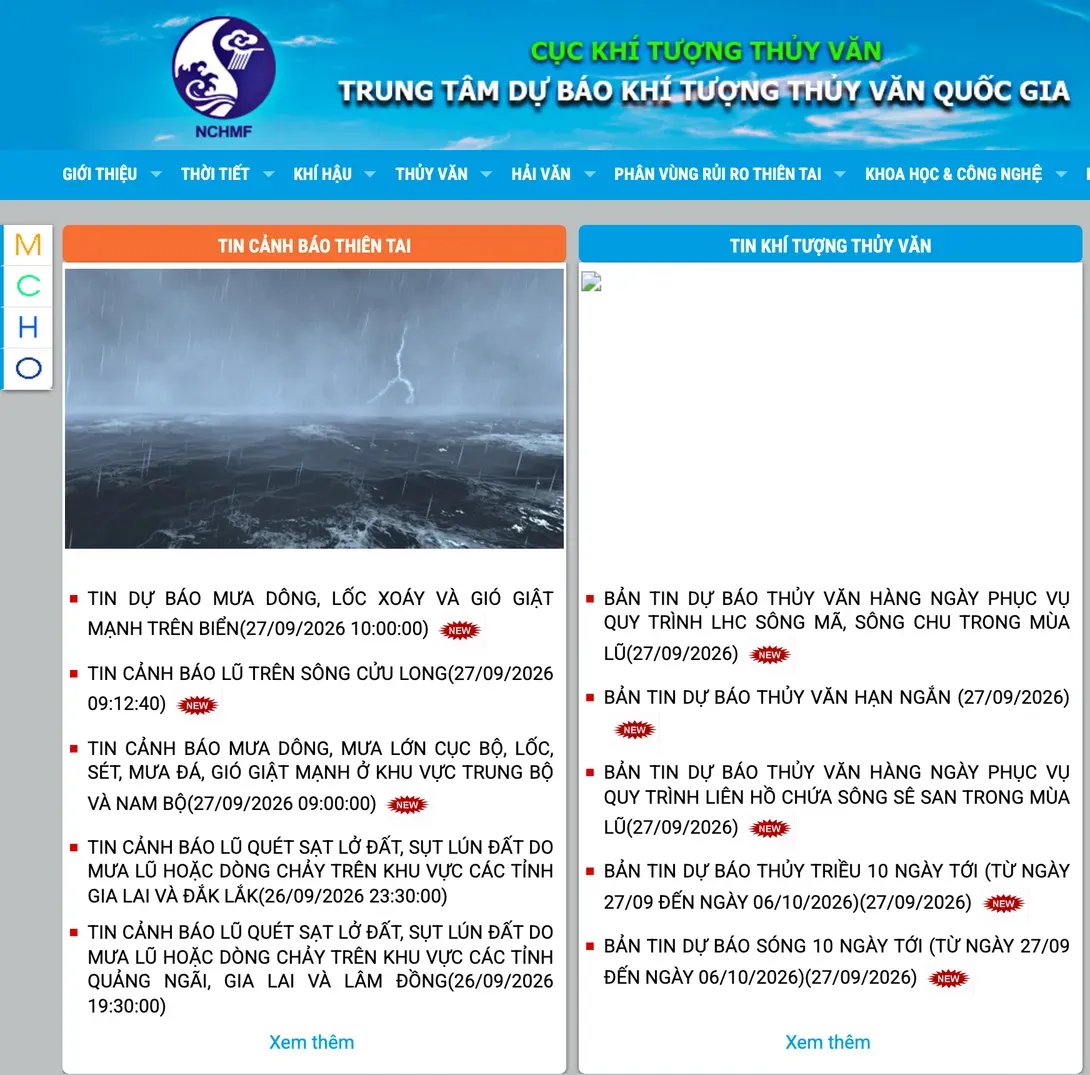
Da Nang’s disaster-prevention command tells residents to closely follow forecast and disaster-warning bulletins at nchmf.gov.vn and kttvttb.vn, the Facebook page “Thông tin phòng chống thiên tai Đà Nẵng,” and to track rainfall at vrain.vn.
What the law asks of you
Điều 34 of Vietnam’s Law 33/2013/QH13 on Natural Disaster Prevention and Control lists obligations, among them to comply with the guidance, direction and command of the competent authorities on evacuating people and vehicles out of, or not entering, dangerous areas. It also requires complying with decisions of the competent authorities mobilising manpower, supplies, vehicles, equipment and essentials for emergency response.
For what heavy rain does to the streets themselves, see which streets flood in Da Nang; for storm surf and rip currents, see is it safe to swim at Da Nang’s beaches. More on daily life here: living in Da Nang guides.
Not confirmed: The regional forecasting office for this stretch of coast, the Đài Khí tượng Thủy văn khu vực Trung Trung Bộ, has no separately published season statement found for this guide — the season above comes from the national forecasting centre alone. The ministry that used to run storm bulletins under the cited Decision has since been reorganised, and no source found here names the exact unit that issues bulletins today. The Decision's own text does not define "Trung Trung Bộ" as a named list of provinces. The road-checkpoint order for the Trà Mi storm is quoted here without a confirmed originating document number.
Common questions
When is typhoon season in Da Nang?
The legal flood season for rivers from Quảng Bình to Ninh Thuận, the stretch of coast that includes Da Nang, runs from 1 September to 15 December each year. For 2024, the national forecasting centre said storm activity was likely to concentrate from October to December in the Trung Trung Bộ and Nam Trung Bộ regions.
What do Vietnam's storm risk levels mean?
Storms threatening Da Nang's region are graded at national disaster risk level 3, 4 or 5, depending on wind force and which regions are forecast to be hit. Level 3 covers force 8–9 and 10–11 storms; level 4 covers force 12–13 and 14–15; level 5 for this region is reached only by a force-16-or-above super typhoon.
Who issues Vietnam's storm warnings?
The Prime Minister's Decision 18/2021/QĐ-TTg names the Vietnam Meteorology and Hydrology Administration, under the Ministry of Natural Resources and Environment, as issuer. Since 2025 that ministry has been reorganised, and no source checked for this guide names the exact unit issuing bulletins today.
Has Da Nang airport closed during a storm?
It did during Storm No. 10 (Bualoi) in September 2025: the Civil Aviation Authority of Vietnam suspended arrivals for several hours, Vietnam Airlines extended its own suspension further, and the airport's own terminal operator confirmed all takeoffs and landings were halted.
Will an airline compensate me if weather cancels my flight?
Check the airline's own terms. Vietnam Airlines, Vietjet and Bamboo Airways each list weather among the grounds on which they do not pay compensation for a cancelled flight.
What has Da Nang ordered residents to do during past storms?
Each order was for one dated storm: a sea-ban decision left to the authorities (Storm No. 3, July 2025), a sea ban (Storm No. 5, from 24 August 2025), a stay-home advisory and evacuation deadlines (Storm No. 6 / Trà Mi, October 2024), road checkpoints (Storm No. 6), and school closures decided locally by wards or schools (Storms No. 10 and No. 12).
Where can I check official storm warnings for Da Nang?
Da Nang's disaster-prevention command points residents to nchmf.gov.vn and kttvttb.vn, the Facebook page "Thông tin phòng chống thiên tai Đà Nẵng," and vrain.vn for live rainfall data.
What does the law require me to do during a storm?
Among the obligations in Điều 34 of Law 33/2013/QH13: complying with the guidance, direction and command of the competent authorities on evacuating out of, or not entering, dangerous areas, and with their decisions mobilising manpower, supplies, vehicles and equipment for emergency response.
Next in Living in Da Nang
General information checked against the sources listed above, not legal advice for your situation. Rules and office practice change; confirm with the immigration office or a licensed adviser before you act. See how guides are checked.
Spotted an error? Report it.