Vietnam Visa Overstay Fine: How Much You'll Pay (2026)
Overstaying a Vietnam visa is a violation from the first extra day. Fines range from 500,000 VND for under 16 days to 40,000,000 VND for over a year, and overstays beyond 16 days may also lead to deportation, which carries a 3-year re-entry ban. Report to the immigration office to pay.
On this page
Say your overstay lands in the 30-to-under-60-day band: the fine is 10,000,000–15,000,000 VND. Because it’s past 16 days, deportation may also be applied as an additional penalty, though it isn’t automatic. Either way, you still need to report it in person and pay.
What counts as overstaying
Your permitted temporary-residence period generally matches your visa’s validity, so overstaying starts the moment that period ends. Even a single extra day is treated as an administrative violation — there’s no grace period.
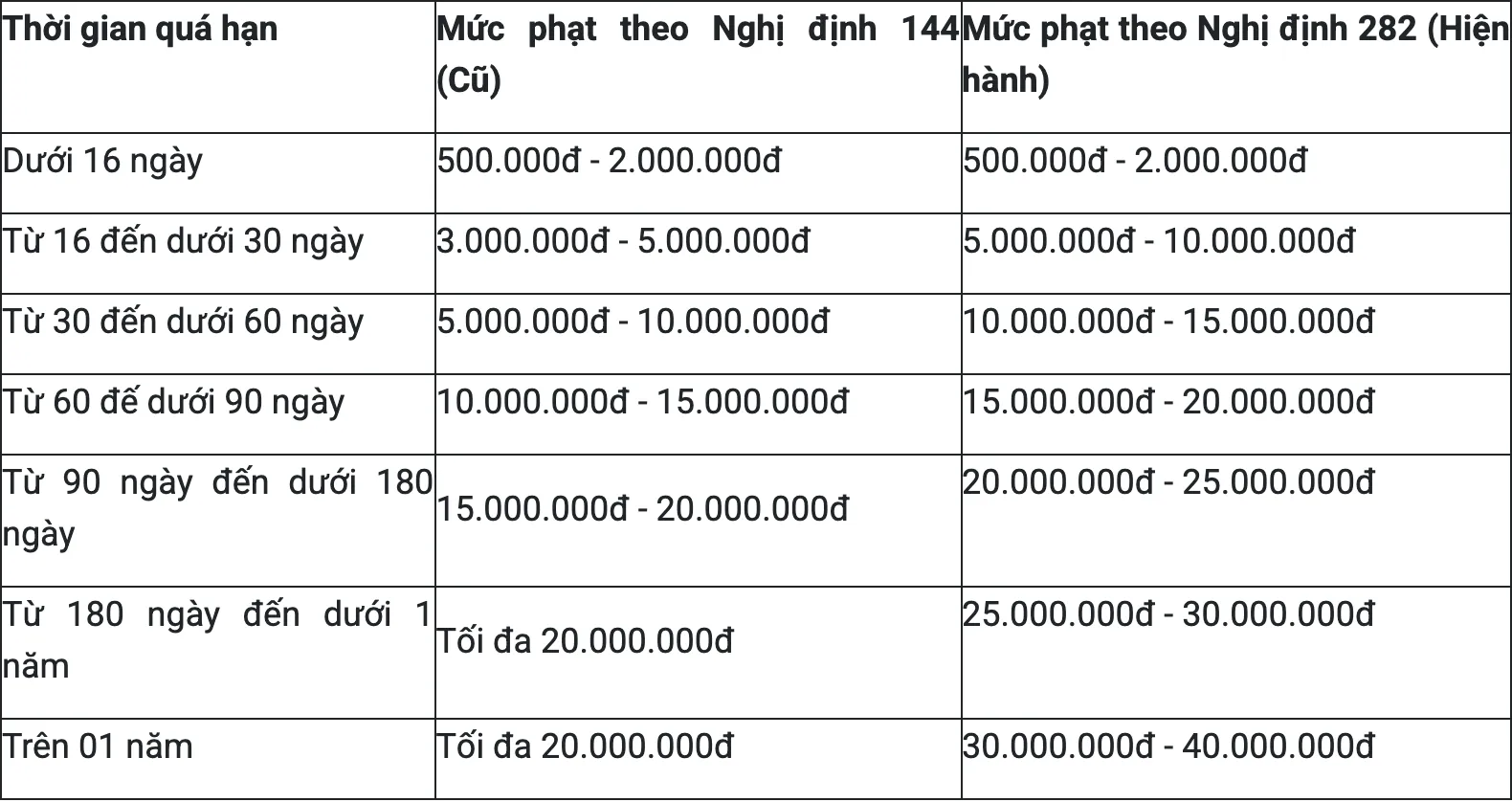
Fine bands by length of overstay
These are the current bands under Decree 282/2025/NĐ-CP, which replaced Decree 144/2021/NĐ-CP.
- Under 16 days: 500,000–2,000,000 VND
- 16 to under 30 days: 5,000,000–10,000,000 VND
- 30 to under 60 days: 10,000,000–15,000,000 VND
- 60 to under 90 days: 15,000,000–20,000,000 VND
- 90 to under 180 days: 20,000,000–25,000,000 VND
- 180 days to under 1 year: 25,000,000–30,000,000 VND
- Over 1 year: 30,000,000–40,000,000 VND
Within a band, the specific fine is the midpoint. Mitigating circumstances can bring it down and aggravating ones can push it up, but never below the band’s minimum or above its maximum.
If a sponsoring organisation is found responsible for the violation, it’s fined at double the individual rate.
Deportation: an extra penalty, not automatic

Overstaying more than 16 days may also lead to deportation as an additional penalty. The rule says “may”, so it isn’t applied to everyone past that point. According to a provincial police summary of Decree 59/2026/NĐ-CP, when a violator is unable to pay the fine, the deportation decision is carried out immediately.
Deportation is a separate legal action from forced exit (buộc xuất cảnh). Forced exit can be ordered when your temporary-residence period has ended and you haven’t left; its re-entry ban is much shorter than deportation’s (below).
How long you’re banned from re-entering

- Deported: not allowed back into Vietnam for 3 years from when the deportation decision took effect.
- Forced exit: not allowed back in for 6 months from when that decision took effect.
Unpaid fines can also block your exit
If you still have a fine to pay, you fall into a group that can be temporarily barred from leaving Vietnam at all. That exit suspension can’t exceed 3 years, though it can be extended.
Where and how you pay
If you’ve overstayed, report in person to the provincial Immigration Management Office where you’re staying to declare the violation, pay the fine, and get guidance on next steps. Once a fine decision is issued, you (or the sponsoring organisation) must pay within 10 days of receiving it, unless the decision itself gives a longer deadline. See Da Nang Immigration Office: Address, Hours, Which to Use for the office to report to.
How to avoid it
Leave before your permitted stay ends, or extend it in time. For an extension, your sponsor, not you, files the application. See How to Extend a Visa in Da Nang: Step by Step for the full process.
More visa guides: the visa hub.
Not confirmed: Whether filing a stay-extension application (Form NA5) before your current period ends keeps you legal while it's processed, or whether you become an overstayer the moment the old period lapses, is unclear — no document or gov source addresses this for the foreigner extension procedure. Whether an overstay fine is ever paid directly at the airport or a border checkpoint on exit, versus beforehand at a provincial Immigration Management Office, is also unconfirmed. Whether Decree 59/2026/NĐ-CP's rule on immediate deportation when someone lacks the means to pay a fine applies to any unpaid overstay fine, or applies solely when deportation is already justified on separate national-security grounds, is unresolved between sources.
Common questions
How much is the fine for overstaying a Vietnam visa?
It depends on how long you overstayed: from 500,000 VND for under 16 days up to 40,000,000 VND for over a year.
Can I be deported for overstaying?
It's possible for overstays beyond 16 days: deportation may be applied as an additional penalty on top of the fine.
How long am I banned from re-entering Vietnam after being deported?
Three years from the date the deportation decision took effect.
What if I'm forced to leave instead of being deported?
A forced exit carries a 6-month re-entry ban from the date that decision took effect, against 3 years after deportation.
Who pays if my sponsoring organisation is responsible?
A sponsoring organisation found responsible for the violation is fined at double the individual rate.
Where do I pay an overstay fine?
Report in person to the provincial Immigration Management Office where you're staying to declare the overstay and pay.
Can an unpaid fine stop me from leaving Vietnam?
It can. Having a penalty decision still to comply with is one of the grounds for temporarily suspending a foreigner's exit, for up to 3 years, and the suspension can be extended.
How do I avoid an overstay fine altogether?
Leave before your permitted stay ends, or extend it in time. For an extension, your sponsor, not you, files the application.
Next in Visas & residence
General information checked against the sources listed above, not legal advice for your situation. Rules and office practice change; confirm with the immigration office or a licensed adviser before you act. How these guides are checked: about Da Nang Oi.