Vietnam Business Visa DN1 vs DN2: What Each One Covers (2026)
DN1 is issued to a foreigner coming to work with a Vietnamese enterprise or organisation; DN2 covers offering services, setting up a commercial presence, or treaty-based activity. They replaced a single earlier DN symbol, last up to 1 year, are requested through a sponsor in Vietnam, and are not on the temporary residence card list.
On this page
- What the split changed, and what it didn’t
- Maximum validity: up to 1 year, and shorter than your passport
- Who can sponsor a DN1 or DN2 visa
- Converting or extending a DN1/DN2 visa inside Vietnam
- Does a DN1 or DN2 visa qualify you for a temporary residence card?
- DN1/DN2 vs a work (LĐ) visa
- DN1/DN2 vs the e-visa
- What a DN1 or DN2 visa costs
- Common questions
DN1 is the visa for a foreigner who comes to work with a Vietnamese enterprise or other organisation that has legal-entity status. DN2 is for a foreigner entering to offer services for sale, set up a commercial presence, or carry out other activities under an international treaty Vietnam is party to. Before Law 51/2019/QH14, both sat under one DN symbol, issued to anyone entering to work with an enterprise in Vietnam. Either way, the answer to most questions is the same: up to 1 year, requested by a sponsor in Vietnam, and no direct route to a temporary residence card.
What the split changed, and what it didn’t
The split changed the symbol, not the length: the original 2014 text already capped the single DN symbol at 12 months, the same maximum DN1 and DN2 carry today. The Ministry of Public Security’s summary of what Law 118/2025/QH15 changed in this law does not mention DN1 or DN2, so I have no sign that it touched them.

The law’s wording for DN1 is “làm việc với doanh nghiệp” — working with an enterprise. Working in Vietnam as an employee has its own pair of symbols: LĐ1 for a foreigner confirmed as not needing a work permit, and LĐ2 for one who must hold a work permit.
Maximum validity: up to 1 year, and shorter than your passport
DN1 and DN2 — along with several diplomatic and other symbols — are valid for a maximum of 1 year. That is shorter than the 2-year cap on LĐ1 and LĐ2 visas. Whatever the symbol, the visa must be set at least 30 days shorter than the remaining validity of your passport.
Who can sponsor a DN1 or DN2 visa
Any enterprise established under Vietnamese law is among the organisations allowed to invite or sponsor a foreigner. The sponsor’s request has to match its own functions or operating licence; I found no separate capital or headcount test for a DN1 or DN2 sponsor.
A foreigner outside the top state-guest categories must go through the inviting or sponsoring organisation, which files the request with the immigration authority. Before sponsoring anyone for the first time, the organisation sends the immigration authority a one-time notice with a certified copy of its establishment licence and a document introducing its seal and authorised signature. The immigration authority then has 5 working days from the sponsor’s request to review it, reply, and notify the Vietnamese visa office abroad.
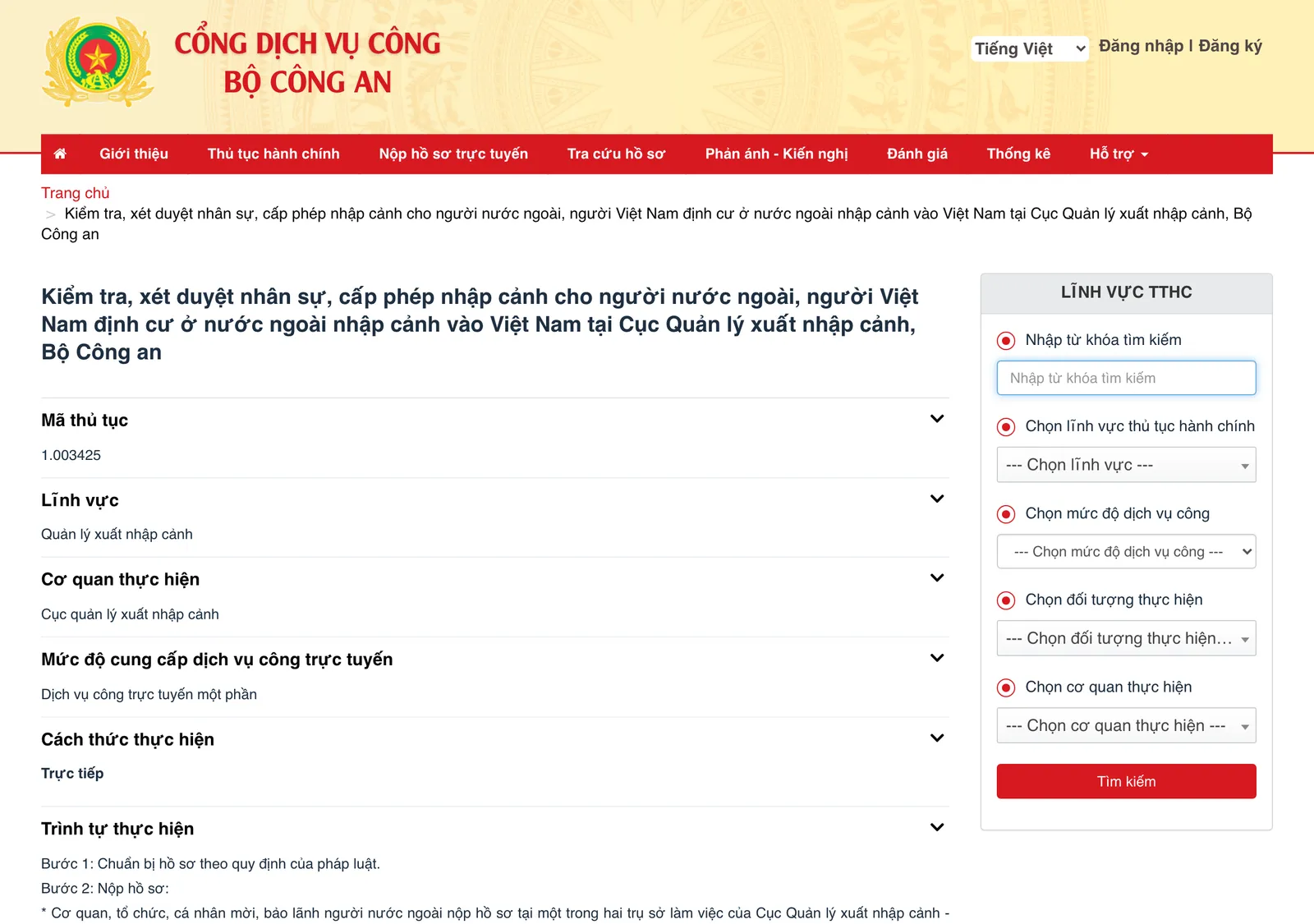
The sponsor files this personnel-review and entry-approval request on form NA2 at one of the Immigration Department’s two head offices, in Hanoi or Ho Chi Minh City. From 1 July 2026, Law 118/2025/QH15 repealed the clauses on paying a courier fee for the visa notification.
Converting or extending a DN1/DN2 visa inside Vietnam
A visa’s purpose cannot be converted except in four cases: proof you are an investor or represent a foreign investor; proof you are the parent, spouse or child of the person inviting you; being invited to work while holding a work permit or exemption; or entering on an e-visa and holding a work permit or exemption. A conversion gives a new visa with the symbol for the new purpose, and none of the four cases is a DN purpose — so nothing converts into DN1 or DN2.
What your sponsor can do is apply to extend your temporary stay. The file can go in person, online or by post, and the immigration authority has up to 5 working days from a complete file. The government fee is US$10 per extension. If a Vietnamese individual is the sponsor rather than a company, that person must be your grandparent, parent, spouse, child or sibling. See how to extend a visa in Da Nang for the full process.
Does a DN1 or DN2 visa qualify you for a temporary residence card?
Not on its own. Article 36, in the 2023 consolidated text, lists who can be issued a temporary residence card: diplomatic and consular staff, and holders of an LV1, LV2, LS, ĐT1, ĐT2, ĐT3, NN1, NN2, DH, PV1, LĐ1, LĐ2 or TT visa. DN1 and DN2 are not on it. Law 118/2025/QH15 added holders of the new UĐ1 and UĐ2 visas, and the ministry’s summary of that law does not mention DN1 or DN2.
The route to a card therefore runs through a purpose conversion — for example, being invited to work while holding a work permit or exemption. A card for an LĐ1 or LĐ2 holder lasts up to 2 years, and always at least 30 days less than your passport’s remaining validity. See getting a temporary residence card in Da Nang for that process.
DN1/DN2 vs a work (LĐ) visa
DN1 and DN2 describe who you deal with: an enterprise you work with, services you offer, a commercial presence you set up. LĐ1 and LĐ2 describe working in Vietnam: LĐ1 for a foreigner confirmed as not needing a work permit, LĐ2 for one who must hold a work permit. LĐ1 and LĐ2 also last longer — up to 2 years against 1 year for DN1 and DN2 — and are on the temporary residence card list. If a Vietnamese company is hiring you, read who needs a work permit in Vietnam before choosing a visa.
DN1/DN2 vs the e-visa
EV is the symbol for Vietnam’s electronic visa. It is issued to any passport holder outside the top state-guest categories of Article 8. The trade-off is length: EV visas are capped at 90 days, against 1 year for DN1 and DN2. The e-visa eligibility rule says nothing about what you will do in Vietnam, so check Vietnam’s e-visa rules and cost against your actual trip before using it in place of DN1 or DN2.
What a DN1 or DN2 visa costs
A single-entry visa of any validity costs US$25. Multiple-entry visas cost US$50 up to 90 days, US$95 for over 90 to 180 days, and US$135 for over 180 days to 1 year. Fees for foreigners are collected in Vietnamese dong or US dollars. If you are not eligible for the visa, or you decline the result, the fee already paid is not refunded. See Vietnam immigration fees in 2026 for the full schedule.
Not confirmed: Whether the law sets any numeric threshold — minimum charter capital or headcount — for a company to sponsor a DN1 versus a DN2 visa is not established: Article 14 requires the sponsor's request to match its own registered functions, and no capital or headcount test for DN1 or DN2 was found. Whether some immigration offices in practice issue a temporary residence card under an LĐ symbol to a DN1 holder without a full Article 7 purpose conversion is also unconfirmed — forum posts suggest it, but that source could not be verified, and the law's own text does not list DN1 or DN2 for a card. Whether Article 7 (purpose conversion) itself was amended by Law 118/2025/QH15 or 23/2023/QH15 is not confirmed either — the Ministry of Public Security's summary of Law 118/2025/QH15 does not mention it, which is negative evidence, not confirmation.
Common questions
What's the difference between DN1 and DN2?
DN1 is issued to a foreigner who comes to work with a Vietnamese enterprise or other organisation with legal-entity status. DN2 is issued to enter and offer services for sale, set up a commercial presence, or act under an international treaty Vietnam is party to. Working in Vietnam as an employee has its own symbols, LĐ1 and LĐ2.
How long can a DN1 or DN2 visa last?
Up to 1 year — the same 12-month maximum the single DN symbol had before it split. The visa must also end at least 30 days before your passport expires.
Can I stay longer without leaving Vietnam?
Your sponsor — not you — can apply to extend your temporary stay, in person, online or by post. Processing takes up to 5 working days from a complete file, and the government fee is US$10.
Does a DN1 or DN2 visa lead to a temporary residence card?
Not on its own. DN1 and DN2 are not on Article 36's list of symbols that can get a card; Law 118/2025/QH15 added the new UĐ1 and UĐ2 visas to that list, and the ministry's summary of it does not mention DN1 or DN2. The route runs through a purpose conversion under Article 7 — for example, being invited to work while holding a work permit or exemption — and LĐ1 or LĐ2 cards last up to 2 years.
Can I convert a tourist visa or e-visa into DN1 or DN2 inside Vietnam?
No. Article 7 allows a purpose conversion in four cases, and none of them leads to DN1 or DN2. A DN1 or DN2 visa is requested by your sponsor through the immigration authority, which then notifies the Vietnamese visa office abroad.
Does a DN1 or DN2 holder need a work permit?
The DN symbols are defined by who you deal with, not by work-permit status. The work-permit split sits in the LĐ pair: LĐ1 for a foreigner confirmed exempt from a work permit, LĐ2 for one who must hold a permit.
Is the e-visa an alternative to DN1 or DN2?
It depends on the trip. The e-visa is open to any passport holder outside the top state-guest categories, but it lasts at most 90 days against 1 year for DN1 and DN2, and its eligibility rule says nothing about business purpose.
How much does a DN1 or DN2 visa cost?
US$25 for a single entry. Multiple-entry visas cost US$50 up to 90 days, US$95 for over 90 to 180 days, and US$135 for over 180 days to 1 year.
Next in Visas & residence
General information checked against the sources listed above, not legal advice for your situation. Rules and office practice change; confirm with the immigration office or a licensed adviser before you act. How these guides are checked: about Da Nang Oi.