Rental Contract in Vietnam: Does a Foreigner's Lease Need Notarising? (2026)
A home lease in Vietnam doesn't have to be notarised or certified, unless both parties want it. The law requires it for a sale, hire-purchase, gift or mortgage, with exceptions. Your lease must be in writing with the items the Housing Law lists, such as parties, price, dates and signatures. It takes effect once signed, or on the agreed date.
On this page
Renting a home in Da Nang as a foreigner comes down to one written contract. Here’s what the Housing Law says, starting with notarisation.
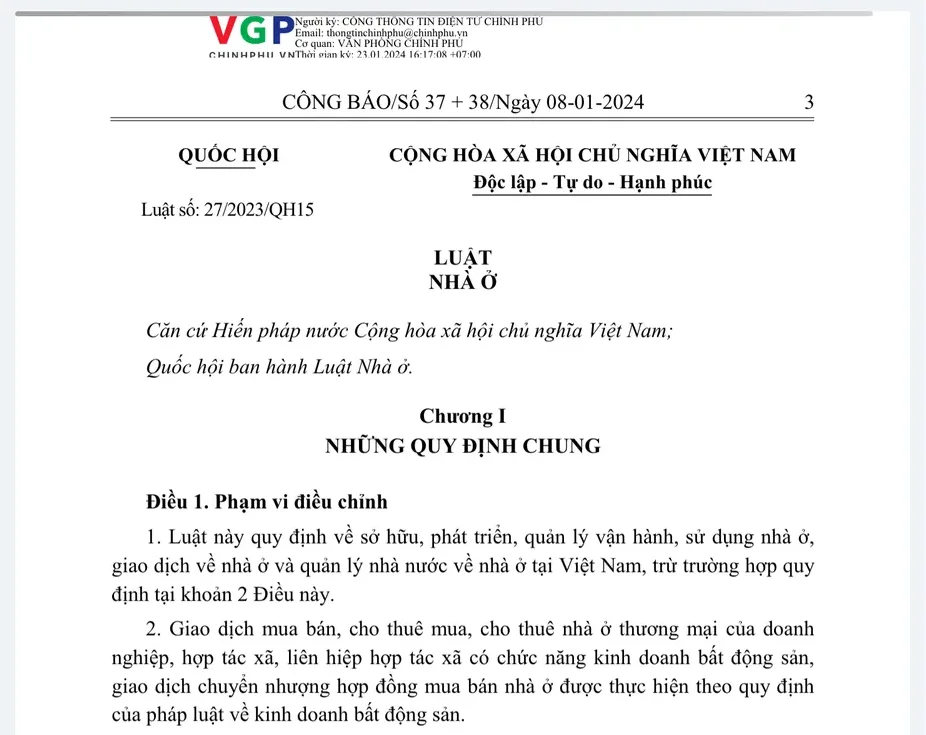
Trường hợp … thuê, mượn, ở nhờ, ủy quyền quản lý nhà ở thì không phải thực hiện công chứng, chứng thực hợp đồng, trừ trường hợp các bên có nhu cầu. Đối với giao dịch quy định tại khoản này thì thời điểm có hiệu lực của hợp đồng là do các bên thỏa thuận; trường hợp các bên không có thỏa thuận thì thời điểm có hiệu lực của hợp đồng là thời điểm ký kết hợp đồng.
For a lease, loan for use, letting-stay-for-free or authorised management, notarising or certifying the contract isn’t required, unless the parties want it. The contract’s effective date is as agreed, or the date it’s signed if the parties haven’t agreed one.
Law on Housing No. 27/2023/QH15, Điều 164 khoản 2
A sale, hire-purchase, gift, exchange, capital contribution or mortgage of housing has to be notarised or certified, except the cases in the clause above. A lease isn’t on that list.
What the Contract Must Contain
By law, a housing contract is as the parties agree, but it must be in writing and include:
- The full name of each individual, the name of each organisation, and the parties’ addresses.
- A description of the home and the land it sits on.
- The price, if the contract sets one, plus the payment term and method.
- When the home is handed over, and the lease term.
- Each side’s rights and obligations.
- The parties’ commitments, and any other agreements.
- The date the contract takes effect, and the date it’s signed.
- Both parties’ signatures and full names — an organisation also seals it and states the signer’s title.
Signing a Valid Lease: Step by Step
- Check you qualify to rent. A foreign tenant must belong to the class allowed to own housing, which includes any foreign individual permitted to enter Vietnam.
- Add the contract’s contents. Draft the contract with the items above, taken from Điều 163.
- Decide on notarising it. A home lease doesn’t have to be notarised or certified — only do it if you and your landlord want to.
- Sign and set the effective date. The contract takes effect on the date you agree, or when you sign it if you don’t set one.
- Register your stay. You declare temporary residence to the local police through the person who manages the place you stay.
Who Can Lease a Home in Vietnam
Your landlord must meet the conditions on transacting parties that civil law sets. For a home being leased out, the law adds:
- It must ensure quality and safety for you, with full electricity, water-supply and drainage systems, and environmental hygiene — unless you both agree otherwise.
- It must still be within its ownership term, for housing under time-limited ownership.
- It must not be seized for a court judgment or a state agency’s administrative decision, and not under an emergency or preventive court measure.
- It must not already have a land-recovery decision, or a demolition or clearance notice from a competent agency.
As the tenant, you must meet those same civil-law conditions on transacting parties.
b) Nếu là cá nhân nước ngoài, người Việt Nam định cư ở nước ngoài thì phải thuộc đối tượng được sở hữu nhà ở tại Việt Nam theo quy định của Luật này và không bắt buộc phải có đăng ký cư trú tại nơi có nhà ở được giao dịch.
As a foreign individual, you must belong to the class of people allowed to own housing in Vietnam under this Law — and you don’t need residence registration where the home is.
Law on Housing No. 27/2023/QH15, Điều 161 khoản 2
That class includes any foreign individual permitted to enter Vietnam.
When a Lease Ends
A housing lease that isn’t public property ends in any of these cases:
- The lease term expires; with no fixed term, it ends 90 days after the landlord’s written notice.
- Both sides agree to end it.
- The leased home no longer exists.
- The tenant, an individual, dies or is declared missing, and no one was living with them at the time.
- A tenant organisation is dissolved, goes bankrupt, or stops operating.
- The home is severely damaged, at risk of collapse, or already subject to a land-recovery, clearance or demolition decision. The landlord must then give at least 30 days’ written notice, unless it’s force majeure or otherwise agreed.
- One of the unilateral-termination cases below.
Ending the Lease Early
During the agreed lease term, your landlord can’t unilaterally end it and take back the home, except in the cases below.
If Your Landlord Ends It Early
- Public-property, social, armed-forces or industrial-park worker housing was leased out without authority, to an ineligible tenant, or without meeting housing-law conditions.
- You haven’t paid the agreed rent in full for 3 months or more, without a reason your contract agreed on.
- You use the home for a purpose other than what the contract agreed.
- You break through walls, extend, renovate or demolish the home on your own initiative.
- You convert, lend or sublet the home without the landlord’s consent.
- You disturb public order or environmental hygiene, seriously affecting neighbours, and have already been recorded for it three times without fixing it.
- One of the cases at Điều 170 khoản 2 of the Housing Law.
If You End It Early
- Your landlord doesn’t repair the home when it’s severely damaged.
- Your landlord raises the rent unreasonably, or without the notice your contract agreed on.
- Your right to use the home is restricted because of a third party’s interest.
Whoever ends it must give the other side at least 30 days’ notice, in writing or another form the contract agrees on, unless otherwise agreed. Breaching this notice rule and causing damage means paying compensation as the law provides.
If the Landlord Sells the Home or Someone Dies
- If the owner dies while your lease term still runs, you can keep renting until the term ends; the heir must continue the lease, unless you agree otherwise.
- If the owner sells the home while your lease term still runs, you can keep renting until the term ends. The new owner must continue the lease, unless you agree otherwise.
- If you, the tenant, die while the lease term still runs, whoever was living with you can keep renting until the term ends. This doesn’t apply to official-duty housing, unless otherwise agreed or the law says otherwise.
Registering Your Stay
You declare temporary residence to the ward or commune police through the person who manages the place you stay. That person asks to see your passport before agreeing to let you stay. See Temporary Residence Registration in Vietnam for who files it and by when.
Step by step
- Check you qualify to rentA foreign tenant must belong to the class allowed to own housing, which includes any foreign individual permitted to enter Vietnam.
- Add the contract's contentsDraft the contract with the items Điều 163 requires — names, description, price, dates, rights and obligations, signatures.
- Decide on notarising itA home lease doesn't have to be notarised or certified — only do it if you want to.
- Sign and set the effective dateThe contract takes effect on the date you agree, or when you sign it if you don't set one.
- Register your stayYou declare temporary residence to the local police through the person who manages the place you stay, who asks for your passport first.
Not confirmed: Whether a draft Housing Law amendment reported by the Ministry of Construction touches the lease-content, notarisation or termination articles cited here is not established. Press coverage so far describes changes to apartment renovation and social-housing policy, not these lease articles. Whether the Housing Law's implementing decree or its later amendment adds any lease-contract clause beyond what's quoted above is also not established. A government-portal page shows a lease-contract template issued under a different decree, for real-estate-business leasing. It's not confirmed whether that decree applies to an ordinary individual landlord.
Common questions
Does a home rental contract in Vietnam have to be notarised?
No. A lease doesn't have to be notarised or certified, unless you and your landlord want it. The law requires it for a sale, hire-purchase, gift, exchange, capital contribution or mortgage of housing, with exceptions.
What must a Vietnam rental contract include?
By law it must be in writing and name both parties, describe the home, and state the price and payment terms. It must also give the handover and lease dates, each side's rights and obligations, and both signatures.
Can a foreigner legally rent a home in Vietnam?
Yes. A foreign tenant must belong to the class the Housing Law allows to own housing, which includes any foreign individual permitted to enter Vietnam. You don't need residence registration where the home is.
How much notice must my landlord give to end the lease early?
At least 30 days, in writing or another form your contract agrees on, if they're ending it under one of the law's unilateral-termination grounds.
What happens to my lease if the landlord sells the house?
You can keep renting until your contract's term ends — the new owner is responsible for continuing it, unless you both agree otherwise.
Can my landlord end my lease if I sublet without permission?
Yes — subletting or lending the home to someone else without your landlord's consent is one of the law's grounds for the landlord to end the lease unilaterally.
Next in Living in Da Nang
General information checked against the sources listed above, not legal advice for your situation. Rules and office practice change; confirm with the immigration office or a licensed adviser before you act. See how guides are checked.
Spotted an error? Report it.