Landlord Not Returning Your Deposit in Vietnam? What the Civil Code Says (2026)
A deposit secures a lease under Vietnam's Civil Code. If the lease is concluded and carried out, you get the deposit back or it's set off against rent. If you refuse to conclude or perform the lease, the landlord keeps it. If the landlord refuses, they must return the deposit plus an equal amount, unless otherwise agreed.
On this page
One article of Vietnam’s Civil Code decides what happens to your rental deposit — for you and for your landlord.
What a deposit legally is
Đặt cọc là việc một bên (sau đây gọi là bên đặt cọc) giao cho bên kia (sau đây gọi là bên nhận đặt cọc) một khoản tiền hoặc kim khí quý, đá quý hoặc vật có giá trị khác (sau đây gọi chung là tài sản đặt cọc) trong một thời hạn để bảo đảm giao kết hoặc thực hiện hợp đồng.
A deposit is one party (the depositor) handing over to the other party (the deposit-receiver) a sum of money, or precious metal, gemstones or other valuable property, for a period, to secure the conclusion or the performance of a contract.
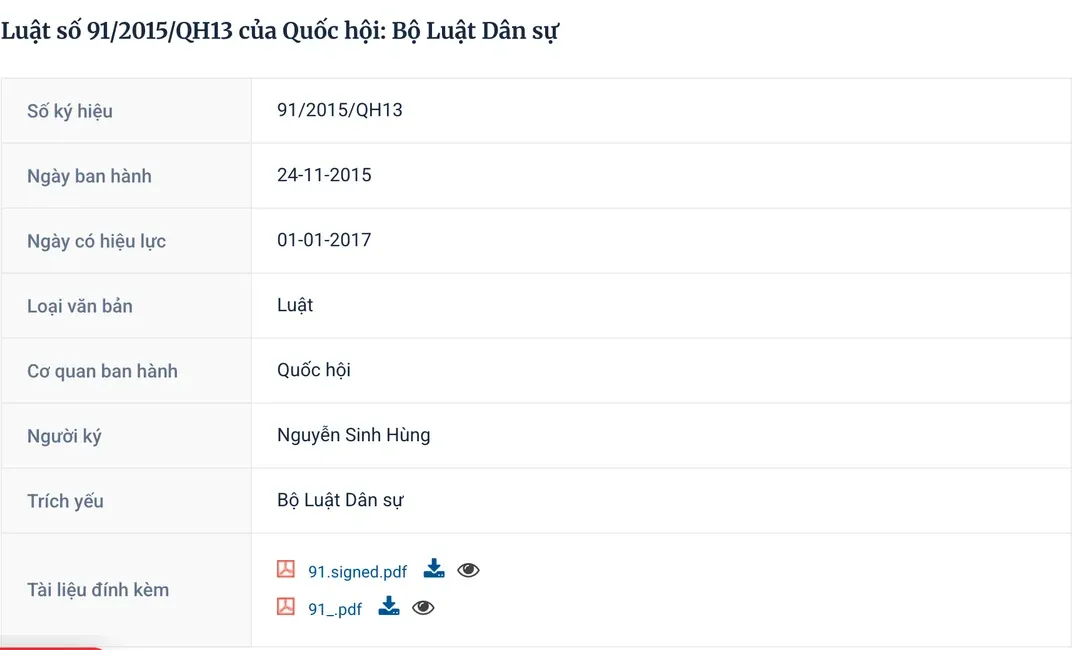
Bộ luật Dân sự 91/2015/QH13, Điều 328 khoản 1
What happens to the deposit — the rule that cuts both ways
This one clause sets a rule for three outcomes: the lease goes ahead, you back out, or the landlord backs out.
Trường hợp hợp đồng được giao kết, thực hiện thì tài sản đặt cọc được trả lại cho bên đặt cọc hoặc được trừ để thực hiện nghĩa vụ trả tiền;
nếu bên đặt cọc từ chối việc giao kết, thực hiện hợp đồng thì tài sản đặt cọc thuộc về bên nhận đặt cọc;
nếu bên nhận đặt cọc từ chối việc giao kết, thực hiện hợp đồng thì phải trả cho bên đặt cọc tài sản đặt cọc và một khoản tiền tương đương giá trị tài sản đặt cọc, trừ trường hợp có thoả thuận khác.
If the contract is concluded and performed, the deposit is returned to you or set off against rent due. If you refuse to conclude or perform it, the deposit belongs to the landlord. If the landlord refuses to conclude or perform it, they must return the deposit plus an equal amount, unless you both agreed otherwise.
Bộ luật Dân sự 91/2015/QH13, Điều 328 khoản 2
If the lease goes ahead as agreed
You get the deposit back, or the landlord applies it to rent you owe.
If you refuse to go through with the lease
The deposit belongs to the landlord.
If the landlord refuses to go through with it
The landlord must return the deposit plus an equal amount on top, unless you both agreed otherwise.
Đặt cọc vs ký cược: two different deposits
Ký cược là việc bên thuê tài sản là động sản giao cho bên cho thuê một khoản tiền hoặc kim khí quý, đá quý hoặc vật có giá trị khác (sau đây gọi chung là tài sản ký cược) trong một thời hạn để bảo đảm việc trả lại tài sản thuê.
The lessee of movable property hands over to the lessor a sum of money, or precious metal, gemstones or other valuable property, for a period, to secure the return of the leased property.
Bộ luật Dân sự 91/2015/QH13, Điều 329 khoản 1
Ký cược applies specifically when the leased property is movable, động sản.
| Outcome | Ký cược rule |
|---|---|
| Leased property returned | Lessee gets the ký cược property back after paying rent due |
| Lessee doesn’t return the property | Lessor has the right to claim back the leased property |
| Leased property no longer exists | Ký cược property belongs to the lessor |
Is there a legal cap on how big a rental deposit can be?
Vietnamese law does set one deposit percentage cap — for a different transaction.
Chủ đầu tư dự án bất động sản chỉ được thu tiền đặt cọc không quá 5% giá bán, cho thuê mua nhà ở, công trình xây dựng, phần diện tích sàn xây dựng trong công trình xây dựng từ bên đặt cọc để mua, thuê mua khi nhà ở, công trình xây dựng đã có đủ các điều kiện đưa vào kinh doanh theo quy định của Luật này.
A real estate project investor may collect a deposit of no more than 5% of the sale or hire-purchase price of housing or construction works from the buyer, once the property meets the conditions to be put into business under this Law.
Luật Kinh doanh bất động sản 29/2023/QH15, Điều 23 khoản 5
That cap governs a real estate project investor taking a deposit to sell or hire-purchase housing or construction works. It says nothing about a landlord’s deposit for a lease.
Getting your deposit back when you move out
Bên thuê phải trả lại tài sản thuê trong tình trạng như khi nhận, trừ hao mòn tự nhiên hoặc theo đúng như tình trạng đã thoả thuận; nếu giá trị của tài sản thuê bị giảm sút so với tình trạng khi nhận thì bên cho thuê có quyền yêu cầu bồi thường thiệt hại, trừ hao mòn tự nhiên.
You must return the leased property in a condition similar to when you received it, except for natural wear and tear, or in the condition you agreed to; if its value has diminished beyond that, the landlord can claim compensation for the damage, except for natural wear and tear.
Bộ luật Dân sự 91/2015/QH13, Điều 482 khoản 1
Natural wear and tear is excluded from what the landlord can claim. Other lease-ending scenarios are covered in rental contract notarising rules.
Where to take a deposit dispute
Grassroots mediation is one route.
Việc hòa giải ở cơ sở được tiến hành đối với các mâu thuẫn, tranh chấp, vi phạm pháp luật, trừ các trường hợp sau đây: a) Mâu thuẫn, tranh chấp xâm phạm lợi ích của Nhà nước, lợi ích công cộng; b) Vi phạm pháp luật về hôn nhân và gia đình, giao dịch dân sự mà theo quy định của pháp luật tố tụng dân sự không được hòa giải; c) Vi phạm pháp luật mà theo quy định phải bị truy cứu trách nhiệm hình sự hoặc bị xử lý vi phạm hành chính; d) Mâu thuẫn, tranh chấp khác không được hòa giải ở cơ sở theo quy định pháp luật.
Grassroots mediation is carried out for disputes, conflicts and legal violations, except: disputes that infringe State or public interests; violations of marriage-and-family or civil-transaction law that civil procedure law does not allow to be mediated; violations requiring criminal prosecution or administrative sanction; and other disputes the law bars from grassroots mediation.
Luật Hòa giải ở cơ sở 35/2013/QH13, Điều 3 khoản 1
If that doesn’t resolve it, a court claim has a deadline.
Thời hiệu khởi kiện để yêu cầu Tòa án giải quyết tranh chấp hợp đồng là 03 năm, kể từ ngày người có quyền yêu cầu biết hoặc phải biết quyền và lợi ích hợp pháp của mình bị xâm phạm.
The limitation period for a request to a court to resolve a contract dispute is 3 years, from the date you knew or should have known your lawful right was infringed.
Bộ luật Dân sự 91/2015/QH13, Điều 429
If your landlord is also overcharging you on utilities, see the legal electricity price and water price rules. More on renting in Da Nang is in the living section.
Not confirmed: No in-force law was found that caps the size of a deposit for an ordinary residential lease. The only statutory percentage cap found, 5%, governs a real estate project investor selling or hire-purchasing housing, a different transaction. The Supreme People's Court's guidance resolution on đặt cọc disputes is still a draft, not yet issued. Which court has first-instance jurisdiction over an ordinary deposit dispute in Da Nang today after recent court restructuring is not confirmed by a primary source in this research. The Housing Law's general chapter on renting housing has no clause on returning money or the home's condition at lease end. A new grassroots-mediation law has been passed to replace the one quoted here but is not yet in force. Whether it changes the disputes open to grassroots mediation is not established.
Common questions
Can my landlord in Vietnam just keep my deposit?
Under the Civil Code, the deposit belongs to the landlord if you refuse to conclude or perform the lease. If the landlord is the one who refuses to conclude or perform it, they must return the deposit plus an equal amount, unless otherwise agreed.
What's the difference between đặt cọc and ký cược?
Đặt cọc secures the conclusion or performance of a contract with money or other valuables. Ký cược specifically secures the return of a rented movable asset, động sản.
Is there a limit on how big a rental deposit can be in Vietnam?
No source found sets a cap for an ordinary lease deposit. The one statutory cap found, 5% of the price, applies to a real estate project investor taking a deposit to sell or hire-purchase housing.
How long do I have to sue if my landlord won't return my deposit?
Three years, from the date you knew or should have known your right was infringed — the limitation period for a court claim over a contract dispute.
Can I resolve a deposit dispute without going to court?
Grassroots mediation is available for disputes and legal violations. Exceptions are State or public-interest matters, certain marriage-and-family or civil-transaction matters barred from mediation, and violations requiring criminal prosecution or administrative sanction.
Do I pay for normal wear and tear when I move out?
No. You return the leased property in the condition you received it, except for natural wear and tear. If its value has dropped beyond that, the landlord can claim compensation.
Next in Living in Da Nang
General information checked against the sources listed above, not legal advice for your situation. Rules and office practice change; confirm with the immigration office or a licensed adviser before you act. See how guides are checked.
Spotted an error? Report it.