Registering a Birth in Vietnam With One or Both Parents Foreign: Deadline, Office and Nationality (2026)
A baby's birth must be registered within 60 days of the birth, under Law 60/2014/QH13 on Civil Status. The father or mother files at the commune-level People's Committee (Decree 120/2025/NĐ-CP). With one Vietnamese parent, the child has Vietnamese nationality if you agree to choose it.
On this page
You have 60 days from your child’s birth to register it. The Law on Civil Status states the deadline like this.
Trong thời hạn 60 ngày kể từ ngày sinh con, cha hoặc mẹ có trách nhiệm đăng ký khai sinh cho con; trường hợp cha, mẹ không thể đăng ký khai sinh cho con thì ông hoặc bà hoặc người thân thích khác hoặc cá nhân, tổ chức đang nuôi dưỡng trẻ em có trách nhiệm đăng ký khai sinh cho trẻ em.
“Within 60 days of the child’s birth, the father or mother is responsible for registering it; if they can’t, the grandparents, another close relative, or whoever is caring for the child is responsible for registering it.”
Luật Hộ tịch 60/2014/QH13, Điều 15 khoản 1
Register with the commune-level People’s Committee. That office now exercises this power.
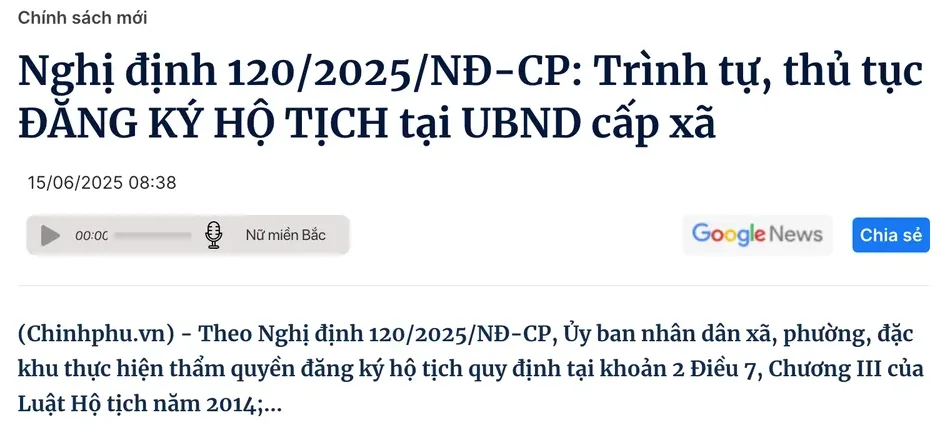
Ủy ban nhân dân xã, phường, đặc khu thực hiện thẩm quyền đăng ký hộ tịch quy định tại khoản 2 Điều 7, Chương III của Luật Hộ tịch năm 2014
“The commune-level People’s Committee — commune, ward or special zone — exercises the civil-status registration powers set out in clause 2 of Article 7 and Chapter III of the 2014 Law on Civil Status.”
Nghị định 120/2025/NĐ-CP, Điều 4 khoản 1
The text of the Law on Civil Status still names the district-level People’s Committee where the father or mother lives, for a birth with a foreign element. That includes a birth in Vietnam where one parent is Vietnamese and the other a foreign national or stateless person, or where both parents are foreign nationals or stateless persons.
Article 35, which says which office registers a birth, is the first article of Chapter III of that law, the chapter on registration at the district-level People’s Committee. Decree 120/2025/NĐ-CP gave the commune-level office the powers in that chapter. File at the commune level.
Steps to register the birth
Once your baby is born, the 60 days start running, and the father or mother is responsible for registering the birth.
- Register within 60 days of the birth. The father or mother is responsible for it. If they can’t, the responsibility passes to a grandparent, another close relative, or whoever is caring for the child.
- Bring the declaration and Birth Notification. Submit the birth-registration declaration and the Birth Notification (Giấy chứng sinh), or the document replacing it. If the hospital’s electronic Birth Notification has already reached the office, no paper copy is needed. You also show the identity papers listed in Article 2(1) of Decree 123/2015/NĐ-CP. If the parents have registered their marriage, the office looks up their marital status from the marriage-certificate details on your declaration. Papers in a foreign language need a Vietnamese translation, notarised or with the translator’s signature certified.
- Add the parents’ nationality paper, if needed. If one or both parents are foreign nationals, the Law on Civil Status requires the parents’ written agreement on the child’s nationality. Choosing a foreign nationality needs a confirmation on the agreement from the competent authority of the country whose nationality is chosen. Papers issued by a foreign authority, such as that confirmation, must be consularly legalised to be used in Vietnam, unless an exemption applies. Legalisation means a Vietnamese authority certifies the seal, signature and title on the paper. With a Vietnamese parent and a child born in Vietnam, if you can’t agree, one parent signs a written declaration that you couldn’t agree.
- File at the commune-level People’s Committee. File where the father or mother resides.
- Get the birth recorded. Once the documents and birth details are complete and consistent, the official records the birth in the register right away, and the official and the person registering both sign it. The birth certificate is issued after that.
- Pay the fee. Da Nang’s schedule lists 50,000 VND when the parents choose a foreign nationality for the child, and 75,000 VND for two other cases, shown in the fee table below. If your case is not in that table, ask the office what you owe.
What changes from 1 March 2027
A new Law on Civil Status takes effect on 1 March 2027, and the current one expires from that date. Until then the rules above apply, and a birth file received earlier but not yet finished is still handled under the rules in force when it was received. For a birth, the new text says:
- The commune-level People’s Committee registers a birth in Vietnam, regardless of the individual’s place of residence. The current law ties filing to where the father or mother lives.
- If the hospital route below does not register the birth, the father or mother is still responsible for registering it within 60 days.
- You may file online, by post or in person.
- Where the hospital’s data is linked to the civil-status system, the commune office registers the birth on its own initiative if you choose that. A Government roadmap sets the roll-out, with nationwide coverage due by 1 January 2031 at the latest.
- Foreign-language papers need a Vietnamese translation with the translator’s signature certified. The new text does not repeat the option of a notarised translation that today’s decree gives.
- The child’s nationality is still decided under civil law and Vietnamese nationality law.
- The Government is to set the detailed procedure. Ask the commune office which papers it wants after that date.
Which nationality will your child have?
If one parent is a Vietnamese citizen
A child with a Vietnamese parent and a stateless parent has Vietnamese nationality, as does a child whose mother is Vietnamese and whose father isn’t identified.
With one Vietnamese parent and one foreign-national parent, here’s the rule that decides it:
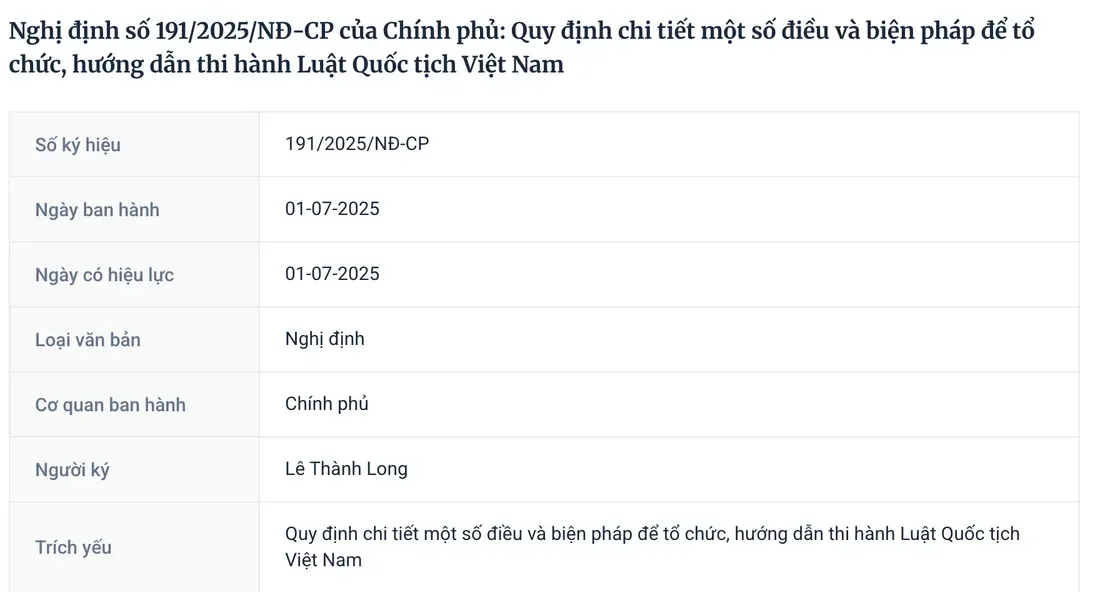
a) Trẻ em có quốc tịch Việt Nam nếu cha mẹ thỏa thuận lựa chọn quốc tịch Việt Nam cho con khi thực hiện đăng ký khai sinh. b) Trường hợp trẻ em được sinh ra trên lãnh thổ Việt Nam mà cha mẹ không thỏa thuận được việc lựa chọn quốc tịch cho con khi thực hiện đăng ký khai sinh thì trẻ em đó có quốc tịch Việt Nam. Cha hoặc mẹ lập văn bản cam đoan về việc không thỏa thuận được việc lựa chọn quốc tịch cho con và chịu trách nhiệm về việc cam đoan này.
“The child has Vietnamese nationality if the parents agree to choose it when registering the birth. If they can’t agree and the child is born on Vietnamese territory, the child still has Vietnamese nationality; one parent must sign a written declaration that they couldn’t agree, and takes responsibility for it.”
Nghị định 191/2025/NĐ-CP, Điều 9 khoản 1 điểm a, b
If your child was already registered abroad with a foreign nationality, they can still get Vietnamese nationality when the birth is recorded in Vietnam’s civil-status register, provided you agree to choose it. Keeping the foreign nationality must also be consistent with that country’s own law. You then sign a written declaration to that effect.
A child holding both nationalities can have a combined Vietnamese-and-foreign name when the birth is registered.
If both parents are foreign nationals
For two foreign-national parents, the Law on Civil Status requires the parents’ written agreement on the child’s nationality. But the nationality rules quoted here cover only a Vietnamese or stateless parent, so they do not say what nationality the child has. Check your own country’s or your embassy’s rule, and ask the registration office which paper it wants.
The birth is still registered at the commune-level People’s Committee, within 60 days of the birth.
For the child’s own papers: a visa is issued to each person separately. The exception is a child under 14 who shares a passport with a parent or guardian: that child is issued a visa along with that parent or guardian.
If both parents are stateless persons
A child born in Vietnam to two stateless parents has Vietnamese nationality if the parents have a place of permanent residence in Vietnam. The same applies if the mother is stateless with permanent residence in Vietnam and the father isn’t identified.
Fee in Da Nang
Da Nang’s civil-status fee schedule sets these fees for a birth with a foreign element. Each row is a separate case, not an add-on to another row:
| Case | Fee |
|---|---|
| Parents choose a foreign nationality for the child | 50,000 VND |
| Registering the birth of someone who already has personal papers and records (an overseas Vietnamese) | 75,000 VND |
| Re-registering a birth with a foreign element | 75,000 VND |
What comes next
Related family paperwork: marrying a Vietnamese citizen in Da Nang and bringing a pet into Vietnam follow their own registration steps. Once your child has papers, see temporary residence registration and current Vietnam immigration fees. For more, see the family section hub.
Step by step
- Register the birthThe father or mother is responsible for registering it within 60 days of the birth. If they can't, it passes to a grandparent, another close relative, or whoever is caring for the child.
- Bring the declaration and Birth NotificationSubmit the birth-registration declaration and the Birth Notification, or the document replacing it. You also show the identity papers listed in Article 2(1) of Decree 123/2015/NĐ-CP. If the parents have registered their marriage, the office looks up their marital status from the marriage-certificate details on your declaration. Papers in a foreign language need a Vietnamese translation, notarised or with the translator's signature certified.
- Add the parents' nationality paperIf one or both parents are foreign nationals, the Law on Civil Status requires the parents' written agreement on the child's nationality. Choosing a foreign nationality needs a confirmation on the agreement from the competent authority of the country whose nationality is chosen. Papers issued by a foreign authority, such as that confirmation, must be consularly legalised to be used in Vietnam, unless an exemption applies. Legalisation means a Vietnamese authority certifies the seal, signature and title on the paper. With a Vietnamese parent and a child born in Vietnam, if you can't agree, one parent signs a written declaration that you couldn't agree.
- File at the commune-level People's CommitteeFile at the commune-level People's Committee where the father or mother resides.
- Get the birth recorded and the certificate issuedOnce the documents and birth details are complete and consistent, the official records the birth in the register right away, and the official and the person registering both sign it. The birth certificate is issued after that.
- Pay the feeDa Nang's schedule lists 50,000 VND when the parents choose a foreign nationality for the child, and 75,000 VND for two other cases in the fee table. If your case is not in the table, ask the office what you owe.
Not confirmed: What Da Nang charges when parents choose Vietnamese nationality. Which office takes the filing if your registered residence is only temporary (tạm trú). How a foreign-national baby gets a visa or residence card, and what happens after day 60. Ask the registration office before you go.
Common questions
How many days do I have to register my baby's birth in Vietnam if I am a foreigner?
60 days from the birth. The father or mother is responsible for registering it; if they can't, the responsibility passes to a grandparent, another close relative, or whoever is caring for the child.
Which office registers the birth?
The commune-level People's Committee (commune, ward or special zone) handles it. The Law on Civil Status still names the district level, but Decree 120/2025/NĐ-CP moved those powers down. File where the father or mother resides.
What documents do I need?
A birth-registration declaration, the Birth Notification or the document replacing it, and your identity papers (Decree 123/2015/NĐ-CP, Article 2(1)). With a foreign parent, add the parents' written agreement on the child's nationality, or, with a Vietnamese parent who can't agree, one parent's written declaration. Foreign-language papers need a Vietnamese translation; papers from a foreign authority also need consular legalisation unless exempt.
Will my child get Vietnamese nationality?
With one Vietnamese and one foreign-national parent, yes, if you both agree to choose it when registering the birth. If you can't agree and the child is born in Vietnam, the child still gets Vietnamese nationality, and one parent signs a written declaration that you couldn't agree.
What if both parents are foreign nationals?
The nationality rules quoted here cover a Vietnamese or stateless parent, so they do not say what nationality the child of two foreign-national parents has. Check your own country's or embassy's rule. The birth is still registered at the commune-level People's Committee, within 60 days.
How much does registering the birth cost in Da Nang?
Da Nang's schedule lists 50,000 VND when the parents choose a foreign nationality for the child. It lists 75,000 VND for registering the birth of a person who already has personal papers and records (an overseas Vietnamese), and 75,000 VND for re-registering a birth. These are separate cases, not added together; the schedule lists no separate fee for a child given Vietnamese nationality, so ask the office.
Does my baby need their own passport and visa?
Each person gets a separate visa, except that a child under 14 who shares a parent's or guardian's passport is issued a visa along with that parent or guardian. This article does not cover how a newborn foreign national gets a passport, visa or residence card; ask your embassy and the immigration office soon after the birth is registered.
Read next
- Marrying a Vietnamese Citizen in Da Nang: Office, Documents and Fee for Foreigners (2026)Verified
- Bringing a Dog or Cat Into Vietnam: Documents, Fees and the Border Check (2026)Verified
- Temporary Residence Registration in Vietnam: Who Files It, and By When (2026)Verified
- Vietnam Immigration Fees in 2026: Visas, TRCs and ExtensionsVerified
Sources and reader comments
Official legal texts (Gazette, government portals):
- Công báo Chính phủ — Luật Hộ tịch số 60/2014/QH13 (Công báo số 1165 + 1166, 29-12-2014) (opens in a new tab)
- Chính phủ — Xây dựng chính sách: Nghị định 120/2025/NĐ-CP, trình tự thủ tục đăng ký hộ tịch tại UBND cấp xã (opens in a new tab)
- Cổng Thông tin điện tử Chính phủ (vanban.chinhphu.vn) — Nghị định 191/2025/NĐ-CP quy định chi tiết một số điều và biện pháp thi hành Luật Quốc tịch Việt Nam (opens in a new tab)
- Cổng TTĐT TP Đà Nẵng — Infographic mức thu lệ phí hộ tịch tại UBND cấp xã (theo Nghị quyết 05/2025/NQ-HĐND) (opens in a new tab)
- Công báo Chính phủ — Nghị định số 07/2025/NĐ-CP, Điều 2 (sửa Nghị định 123/2015/NĐ-CP) (opens in a new tab)
Show 10 more sources
- Decree 123/2015/ND-CP - Official Gazette PDF (opens in a new tab)
- Law on Civil Status 60/2014/QH13 - Official Gazette PDF (No. 1165+1166, 29 Dec 2014) (opens in a new tab)
- Công báo Chính phủ — Nghị định số 123/2015/NĐ-CP quy định chi tiết một số điều và biện pháp thi hành Luật Hộ tịch (văn bản gốc) (opens in a new tab)
- Công báo Chính phủ — Nghị định số 111/2011/NĐ-CP về chứng nhận lãnh sự, hợp pháp hóa lãnh sự (opens in a new tab)
- Decree 196/2025/ND-CP - Official Gazette PDF (opens in a new tab)
- Công báo Chính phủ — Văn bản hợp nhất số 53/VBHN-VPQH hợp nhất Luật Quốc tịch Việt Nam (24-07-2025, đã gồm Luật 79/2025/QH15) (opens in a new tab)
- Law 51/2019/QH14 amending Law 47/2014/QH13 — Công báo PDF (opens in a new tab)
- Công báo Chính phủ — Nghị định số 111/2011/NĐ-CP, Điều 2 (PDF) (opens in a new tab)
- Cổng TTĐT TP Đà Nẵng — Việc xác định một người có quốc tịch Việt Nam được quy định như thế nào? (opens in a new tab)
- Luật Hộ tịch số 03/2026/QH16 — bản ký, Công báo số 285 ngày 27-05-2026 (congbao.chinhphu.vn) (opens in a new tab)
General information checked against the sources listed above, not legal advice for your situation. Rules and office practice change; confirm with the immigration office or a licensed adviser before you act. See how guides are checked.
Spotted an error? Report it.
Comments (0)
Be the first to ask about this topic.